ADVERTISEMENT

ADVERTISEMENT



Snow skips date with Toronto
Of late, December has been witnessing less snow than the same month in previous years. Last year, only 76 per cent enjoyed a white Christmas.
-
 Prabhjot Paul Singh
 - Thu, 25, Dec 2025
- 23:44 EST
- 8
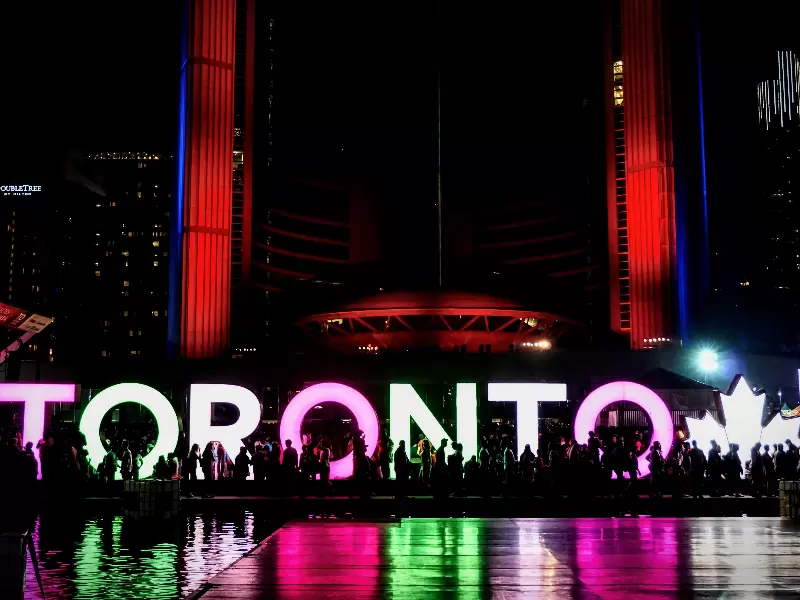 Representative Image / Pexels
Many Torontonians expecting snow-blanketed streets on Christmas morning woke up to a rude shock, finding their surroundings bare and brown with no trace of soft white from the sky. Instead, the weathermen partially consoled them by forecasting a white crown on Dec. 26, Boxing Day.
Of late, December has been witnessing less snow than the same month in previous years. Last year, only 76 per cent enjoyed a white Christmas. According to Environment Canada, it is a “white Christmas” only if there are at least 2 c.m. of snow on the ground by 7 a.m. on Dec. 25.
ALSO READ: Canadian agencies track down gang using women to smuggle cannabis
“I have never seen such a dry Christmas day ever since I moved to Canada more than 50 years ago,” recalls S P Singh, saying, “We used to love trudging through ankle-to-knee-deep snow on the morning of December 25. But for the last few years, the quantum of snowfall has been coming down. There had been occasions when it did not snow as much as expected, but still, we normally had a “white Christmas.” The snow depth has been shrinking over the years.”
Newspapers and social media channels ran special stories on the “snow” skipping date with several parts of Canada on “Christmas Day,” highlighting ecological and environmental degradations.
Most of the environmentalists are unanimous in their opinion that thinning of snow is directly linked to rising December temperatures. They admit that it is the “human factor” that has been causing “global warming.” Even a moderate increase in temperatures can lead to a major reduction in snowpack.
It is not only a spectacle of nature and its divine beauty but also a source of sustenance for hundreds and thousands of people associated with the tourism and hospitality industry, who always look forward to snowy canopies in their towns and cities to attract tourists.
Some environmentalists hold that more rain in the month of December reduces the accumulation of snow and hence bald and barren streets on Christmas Day.
Snow precipitation starts high in the skies. How this precipitation reaches the ground depends upon the temperature in the layers it moves through. If the lower layers are warm, the snow melts into rain. And if the temperature stays cool all the way down to earth, it remains snow, Canadian media quoted Lawrence Mudryk, a scientist at Environment and Climate Change Canada, as saying.
He holds that the shift towards more rain than snow throughout winter is due to climate change. He says that if we see more rain before Christmas in the future, then it will reduce the total amount of accumulation of snow that we see by Christmas.
In Toronto, the business capital of Canada, the long-term and recent average snow depth on Christmas Day remains unchanged, but that does not mean an uneventful year-to-year change. In fact, a Canadian newspaper said the city has swung between deep snowpacks and bare ground on Christmas over the past 50 years. And this year, the snow left Toronto bare.
Related











ADVERTISEMENT
ADVERTISEMENT
E Paper
Video

Comments
Start the conversation
Become a member of New India Abroad to start commenting.
Sign Up Now
Already have an account? Login