ADVERTISEMENT

ADVERTISEMENT



Pentagon scraps 93 Senior Service College fellowships at elite universities
The cancelled fellowships include placements at Harvard University, MIT, Tufts University, Georgetown University, Columbia University, Yale University, and Princeton University, among others.
-
 IANS
IANS - Sat, 28, Feb 2026
- 03:10 EST
- 16
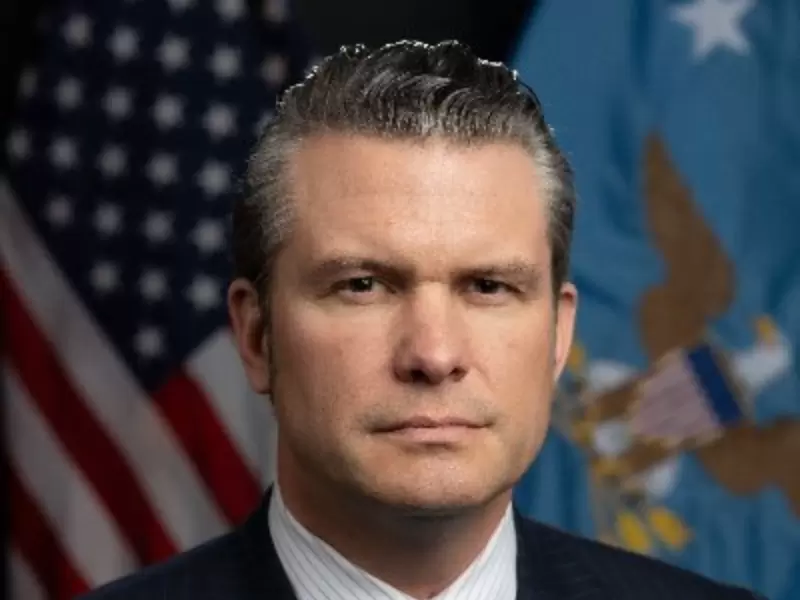 Pentagon scraps 93 Senior Service College fellowships at elite universities / X/@SecWar
In a move aimed at sending a direct political and financial signal to elite academic institutions, the U.S. Department of War announced to cancel as many as 93 Senior Service College fellowships at 22 institutions, including Harvard University and other Ivy League schools, saying the move is needed to realign military education with “American values” and the “warrior ethos”.
In a Feb. 27 memorandum titled “Aligning Senior Service College Opportunities with American Values”, the Secretary of War Pete Hegseth said, “Our Professional Military Education (PME) institutions are among our most sacred and essential means to restore and maintain the warrior ethos within the DoW. It is imperative that our warfighter education system forges strategic senior leaders who are trained to think critically, free of bias and influence.”
ALSO READ: Pentagon chief Hegseth says officers will stop attending Ivy League programs
The memo directs a strategic refocus of senior officer education beginning in the 2026–2027 academic year. It eliminates certain Senior Service College fellowship programmes and orders the compilation of “a revised list of elite institutions offering equivalent programs to replace those eliminated.”
The Secretary wrote, “We will no longer invest in institutions that fail to sharpen our leaders' warfighting capabilities or that undermine the very values they are sworn to defend.”
According to the memorandum, the cancelled fellowships include placements at Harvard University, Massachusetts Institute of Technology, Tufts University, Georgetown University, Columbia University, Yale University, and Princeton University, among others.
Think tanks in Washington, such as the Center for Strategic and International Studies, the Brookings Institution, the Atlantic Council, and the Council on Foreign Relations are also affected. In total, 93 SSC fellowships at 22 institutions are being discontinued.
“These actions continue the Department's broader "Rapid Force-Wide Review of Military Standards," reinforcing the Secretary's commitment to high standards, educational excellence, and the development of military leaders prepared to win the Nation's wars,” said Chief Pentagon Spokesman Sean Parnell.
The memo states that the change “will ensure our leaders receive a more rigorous and relevant education to better prepare them for the complexities of modern warfare and return our Force to the original purpose of SSCs: the preparation of senior officers to be critical thinkers that can plan and integrate multi-domain Joint operations at echelon and serve (and think) at the strategic level.”
The policy applies to all Department of War personnel starting with the 2026–2027 academic year. Those already enrolled in the 2025–2026 cycle may complete their studies. The Under Secretary of War for Personnel and Readiness will oversee implementation.
The move builds on an earlier Feb. 6 memorandum titled “Rebuilding the Warrior Ethos in Professional Military Education”. In that document, the Secretary wrote that “America’s highly ranked universities no longer live up to their promise to develop critical thinking from multiple viewpoints. Too often, our warfighters are taught what to think not how to think.”
Referring specifically to Harvard, he said, “Harvard’s partisan faculty negative bias towards military actions and discourages alternative viewpoints, limiting critical thinking.” He added that, starting in the 2026–2027 school year, he was “discontinuing all graduate level Professional Military Education, fellowships, and certificate programs between Harvard University and the Department of War for active-duty Service members.”
The memorandum also lists potential new partner institutions. These include senior military colleges such as The Citadel and the University of North Georgia, as well as civilian universities including Liberty University, George Mason University, the University of Michigan, the University of North Carolina and Hillsdale College.
The document says these institutions meet criteria such as “intellectual freedom, minimal relationships with adversaries, minimal public expressions in opposition of the Department, and Graduate-level National Security, International Affairs, and/or Public Policy Programs.”
Discover more at New India Abroad.
Related






ADVERTISEMENT

ADVERTISEMENT
E Paper
Video

Comments
Start the conversation
Become a member of New India Abroad to start commenting.
Sign Up Now
Already have an account? Login