ADVERTISEMENT
ADVERTISEMENT



Ebola Outbreak Could Be Worst in History
According to Dr. Sweet, armed factions have infiltrated public health ministries at both local and national levels, creating significant obstacles to disease containment efforts
-
 Ritu Marwah
 - Thu, 25, Jun 2026
- 03:57 EDT
- 24
 Representative image / Hl- Goyle loses N.Y. state comptroller race; DiNapoli wins again Excerpt- DiNapoli will now face off against Hernandez in the November general election. Indian American New York State Comptroller hopeful Raj Goyle was defeated by longtime incumbent rival Thomas P. DiNapoli, New York's longest-serving statewide elected official, in the Democratic primary. DiNapoli, who was reportedly facing his first primary challenge, defeated both Democratic rivals Goyle and Drew Warshaw by a significant mar
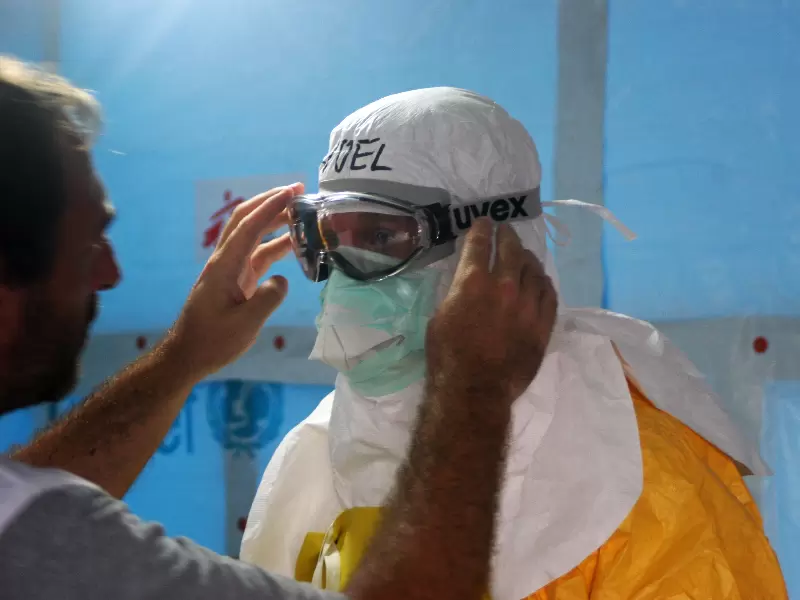
The Centers for Disease Control and Prevention (CDC) is responding to an outbreak of Ebola disease caused by the Bundibugyo virus in remote areas of the Democratic Republic of the Congo (DRC) and Uganda. Ebola disease is a viral hemorrhagic fever that can result in death. It is spread through bodily fluids, and victims remain highly infectious after death. To date, no cases of Ebola disease have been confirmed in the United States because of this outbreak, the CDC reported.
The Ebola outbreak is occurring at a time when international cooperation on health and aid is shaky, largely due to the U.S.'s slashing of foreign aid at the start of President Donald Trump's term and the subsequent closure of the U.S. Agency for International Development (USAID), which had supported many health programs overseas. European donors have also scaled back assistance in the past year.
Challenges in Facing the Ebola Virus
During a recent briefing by American Community Media, infectious disease specialists and regional analysts discussed the challenges in facing the virus.
As of mid-June 2026, the World Health Organization has reported nearly 700 confirmed cases and more than 130 deaths, with numbers continuing to rise. "Diagnostic capability, clinical expertise and communications were impaired by the withdrawal of support by USAID. This may have contributed in some cases to a delay in diagnosis," said Dr. Schaffner, professor of preventive medicine and infectious diseases at the Vanderbilt University School of Medicine.
"As a vaccine is not available against this strain of the Ebola virus, the best way to contain it is to isolate the people who have been infected. The World Health Organization (WHO) is bringing in help," he assured. However, "the virus's capacity for spreading locally is real," he warned. Initial symptoms may be misdiagnosed. "Respectful burial practices are very dangerous," said Dr. Schaffner. Body fluids are highly contagious. Family members and caregivers are at risk when handling the deceased.
Dr. Rachel Sweet of Frontline Observatory, who spent five years in the Democratic Republic of the Congo, said there is a stark difference in how these issues are reported.
Distrust of Authorities Undermines Ebola Response in Conflict-Affected Regions
The response to Ebola in conflict-affected regions faces a major challenge: the deep entanglement of violence and state institutions.
Eastern DRC, where the virus is spreading, has become a battlefield on which armed groups, most notably the M23 rebel group, are battling government forces despite ongoing diplomatic efforts to end the conflict. This makes it much harder for health workers to travel in the region to trace the disease's spread effectively or provide care to infected people who might be in rebel-held territory or crowded refugee camps.
As a result, authorities say, the virus is spreading faster than health care workers can keep pace, and hundreds of people have already been infected. Officials fear there are numerous undetected cases.
According to Dr. Sweet, armed factions have infiltrated public health ministries at both local and national levels, creating significant obstacles to disease containment efforts. The overlap between security forces, government authorities and health agencies has fueled widespread public distrust of Ebola response teams.
"The same authorities that civilians fear as perpetrators of violence are often the authorities partnering with Ebola responders," she noted.
For many residents, the vehicles used by Ebola health workers carried troubling associations. "People were fearful. The Ebola pickups were the same ones that could come at night and slaughter their family," Sweet said.
As a result, resistance to Ebola interventions was often rooted not in misinformation about the disease but in longstanding fears of state and security actors. Experts argue that public skepticism reflects a lack of trust in authorities rather than a rejection of scientific evidence.
"The really important thing is to depoliticize the Ebola response," she said.
A former combatant described to her how military commanders frequently held leadership positions within government structures, further blurring the lines between public health efforts and security operations.
Dr. Sweet stressed that international organizations must carefully verify and communicate information while paying close attention to who delivers health services. Questions such as whether doctors are local, who funds the response and which authorities are involved can strongly influence public perceptions.
Residents often worry that health interventions could increase their vulnerability, lead to further disenfranchisement or divert attention from the security threats they face daily. Some fear that a narrow international focus on Ebola may overshadow the broader violence and instability affecting their communities.
Rebuilding trust, ensuring transparency and separating health initiatives from political and military structures will be critical to improving public cooperation and containing future outbreaks.
Discover more at New India Abroad.
Related








ADVERTISEMENT

ADVERTISEMENT
E Paper
Video

Comments
Start the conversation
Become a member of New India Abroad to start commenting.
Sign Up Now
Already have an account? Login