ADVERTISEMENT
ADVERTISEMENT



When AI changes work, India’s talent story must change too
What employers seek at the beginning of a career has changed faster than most educational systems have changed
-
 Prasad Kaipa
 - Fri, 01, May 2026
- 16:59 EDT
- 15
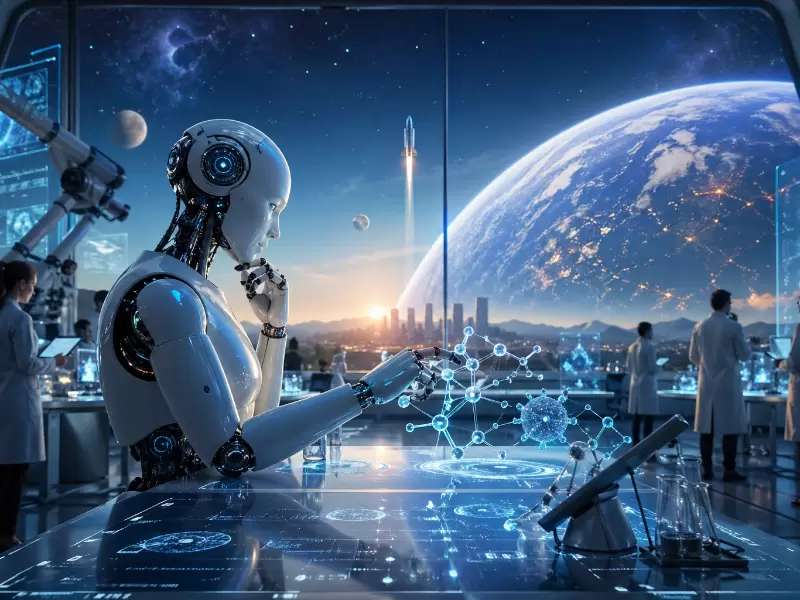 Representative Image / Generated using AI
For years, Indian families have lived by a simple faith: if a young person studies hard, earns a strong degree, and builds solid technical skills, a good future will follow. That faith has not disappeared. But it is being tested in new ways.
I have been hearing the same concern from many directions — from younger people in my own extended family, from students, and from professionals trying to find their footing in a changing market. They are not confused, unprepared, or unwilling to work. In many cases, they have done exactly what they were told to do. They chose practical fields. They worked hard. They earned respectable degrees. They built portfolios, took internships, and learned the language of achievement that the global economy seemed to reward.
Also Read: Beyond passion and purpose: What many Indians abroad are quietly confronting
Yet the world waiting for them is no longer the one that shaped those expectations.
Artificial intelligence is part of that change, but not in the simplistic sense that “A.I. is taking all the jobs.” The deeper shift is more subtle. Employers now mean something different when they say a person is ready. They want people who can contribute sooner, move across functions, use A.I. tools intelligently, and make sound judgments in situations that are not neatly defined. For international graduates, there is an added complication: even when they are capable, immigration rules make the transition from education to employment more fragile than before.
This is why so many young people feel unsettled. It is not only that the market is tighter. It is that the old path from campus to career is harder to cross.
For decades, the United States benefited from a powerful and largely dependable talent flow. Students came from many parts of the world, especially from India, to study engineering, computer science, design, business, and related fields. They learned quickly, adapted well, and entered the workforce. Many went on to become founders, senior leaders, investors, and creators of the very systems that powered the digital economy.
This arrangement served everyone. America gained talent. India gained confidence. Families gained hope. A generation of young people grew up believing that disciplined effort, backed by technical education, could open the world.
That story is still partly true. But it is no longer complete.
What employers seek at the beginning of a career has changed faster than most educational systems have changed. Entry-level jobs often demand experience that earlier generations gained only after they were hired. Internships are more competitive. New graduates are expected to show judgment, communication, initiative, and range — not just competence in one technical area. In many workplaces, the opportunity to “join, learn, and grow into the role” is shrinking.
That matters especially for India.
India has spent decades building one of the most impressive talent engines in the world. Engineering became a path to mobility and dignity. A generation of companies showed that Indian professionals could deliver world-class technical work at scale. Over time, Indians moved from coding and execution to management, strategy, entrepreneurship, and leadership. This was not an accident. It was the result of aspiration, discipline, educational investment, and a willingness to align with global demand.
But A.I. is changing the terms of that alignment.
Technical knowledge still matters. Coding still matters. Analytical ability still matters. But those strengths, by themselves, no longer carry the same promise they once did. When intelligent tools can generate drafts, write code, summarize information, and speed up routine tasks, technical skill is still valuable — but it is less decisive on its own.
Something else is becoming more important.
The people who will thrive are not just those who know how to do a task. They are those who can define the real problem, ask better questions, connect ideas across domains, and make wise decisions when the answer is not obvious. They can work with technology without becoming mechanical themselves. They bring judgment, taste, maturity, and the ability to learn continuously.
That is why the phrase “soft skills” feels too small for this moment. We are not speaking about polish or personality. We are speaking about deeper capacities: self-awareness, resilience, humility, discernment, and the ability to stay clear-headed when the ground is shifting. These are not decorative human qualities. They are increasingly central to employability, leadership, and long-term relevance.
A.I. can generate many answers. It still cannot tell us which questions are worth asking, which trade-offs matter, or what kind of future is worth building.
This should concern education leaders in India and beyond. If universities continue preparing students mainly for roles that are becoming narrower, more crowded, or easier to augment with machines, then disappointment will grow even among highly capable graduates. The real danger is not simply unemployment. It is misalignment — between what young people are taught, what employers now need, and what the future will demand.
That is why this moment should not be treated only as a technology story. It is also a human-development story.
For too long, education has been treated as a transaction: choose the right field, earn the right credential, and opportunity will follow. But the world emerging now is asking for something more. It still rewards skill, but it also rewards judgment. It still needs competence, but it also needs character. It still values knowledge, but increasingly it depends on the ability to integrate knowledge, context, and purpose.
The Indian experience offers both a warning and an opening.
It reminds us that no national advantage lasts forever. Every success formula has a life cycle. The first wave of Indian success in the global economy was built on technical excellence. The second was built on leadership and entrepreneurship. The next may have to be built on something deeper: the ability to combine intelligence with wisdom, skill with discernment, and ambition with inner grounding.
That would not be a retreat from India’s strengths. It would be their renewal.
In the years ahead, the real divide may not be between people who use A.I. and people who do not. It may be between those who let technology narrow their humanity and those who use it while becoming more fully human.
That is the challenge before India now. And it may also become its next great opportunity.
The writer is the co-founder of the Institute of Indic Wisdom.
(The views and opinions expressed in this article are those of the author and do not necessarily reflect the official policy or position of New India Abroad.)
Discover more stories on New India Abroad

ADVERTISEMENT

ADVERTISEMENT
E Paper
Video

Comments
Start the conversation
Become a member of New India Abroad to start commenting.
Sign Up Now
Already have an account? Login