ADVERTISEMENT
ADVERTISEMENT



Krithi Karanth named 2026 National Geographic Explorer of the Year
She is also an adjunct faculty member at the Nicholas School at Duke University in the United States and the National Centre for Biological Sciences in India.
-
 Pranavi Sharma
 - Thu, 07, May 2026
- 02:00 EDT
- 41
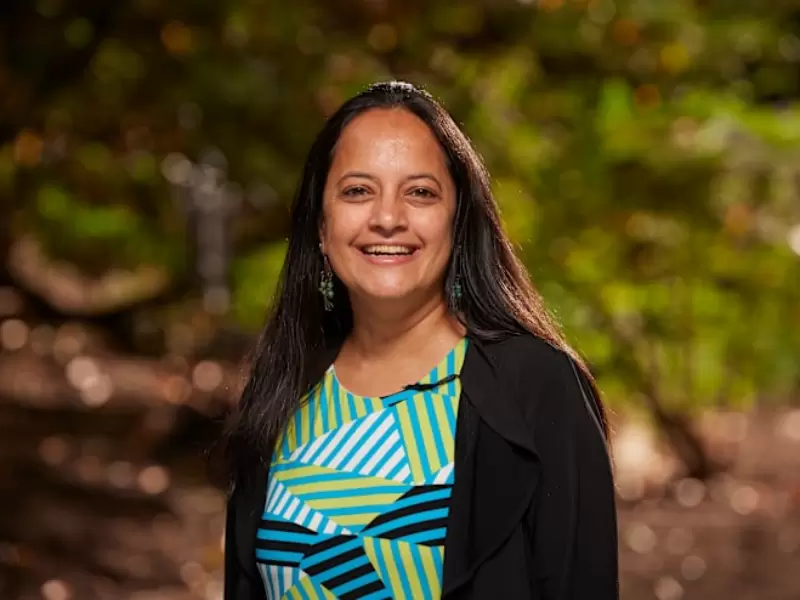 Krithi K. Karanth / Mark Thiessen/National Geographic
The National Geographic Society has named Indian conservation scientist and educator Krithi K. Karanth as the 2026 Rolex National Geographic Explorer of the Year, making her the first South Asian and Indian to receive the honor.
Karanth is the chief conservation scientist and director at the Centre for Wildlife Studies in Bengaluru, India. She is also an adjunct faculty member at the Nicholas School at Duke University in the United States and the National Centre for Biological Sciences in India.
The National Geographic Society said Karanth was selected for her work on human-wildlife coexistence and her efforts to protect wildlife and habitats in India. The award will be presented during the Society’s annual Explorers Festival, hosted in partnership with Rolex.
ALSO READ: Priyanka Chopra named in National Geo global changemakers
The Society described the award as one of its highest honors, recognizing individuals whose work has had a major impact on conservation and exploration.
“Krithi embodies the very best of what it means to be a National Geographic Explorer,” said Jill Tiefenthaler, CEO of the National Geographic Society.
“Through her leadership at CWS and her multiple ambitious conservation programs she’s sparked a movement of hope among communities and thousands of young people in India and globally,” Tiefenthaler said.
“By combining science, education and community partnership, Krithi has reshaped and improved the relationship between people and wildlife in ways that are visionary, collaborative and profoundly optimistic,” she added.
Karanth has worked with the National Geographic Society since 2011, when she became the recipient of the Society’s 10,000th grant. Since then, she has received multiple grants and recognitions from the organization.
According to the Society, the Centre for Wildlife Studies has reached 7,000 villages across India and worked to reduce conflict affecting more than 100,000 people. The organization has also provided conservation education resources to more than 1,600 schools in seven Indian languages across 39 wildlife reserves.
The Society said CWS partnered with 10,000 farmers to promote wildlife-friendly practices and trained 50,000 local stakeholders in more than 100 wildlife reserves across eight Indian states.
Karanth has authored more than 100 scientific research papers focused on human-wildlife interactions, species extinctions, tourism, land-use change, hunting and wildlife trade. She has also mentored more than 300 young scientists from several countries and engaged 1,000 citizen science volunteers in research and field projects.
Her education initiative, ‘Wild Shaale,’ was launched in 2018 with fellow National Geographic Explorer Gabby Salazar. The program uses art, storytelling and play-based learning to teach children living near wildlife habitats about coexistence with animals. According to the Society, the initiative has reached 72,000 children in 1,626 schools.
Karanth has received more than 50 awards for her conservation, research and education work. She was named a Rolex Laureate in 2019, received the 2025 McNulty Prize and was awarded the 2026 Esmond B. Martin Royal Geographical Society Prize.
“To be named Explorer of the Year by National Geographic Society and Rolex is an incredible milestone,” Karanth said.
“At the Centre for Wildlife Studies our unwavering commitment to the well being of wildlife and people underpins our science-based conservation actions,” she said. “This recognition provides a distinguished global platform to elevate our innovative, impactful and scalable conservation programs.”
Discover more stories on NewIndiaAbroad
Related








ADVERTISEMENT

ADVERTISEMENT
E Paper
Video

Comments
Start the conversation
Become a member of New India Abroad to start commenting.
Sign Up Now
Already have an account? Login