ADVERTISEMENT
ADVERTISEMENT



72% AAPI adults say U.S. overspends on immigration enforcement
Survey shows strong focus on affordability, healthcare costs, and shift toward social spending
-
 Malvika Choudhary
 - Thu, 30, Apr 2026
- 17:56 EDT
- 20
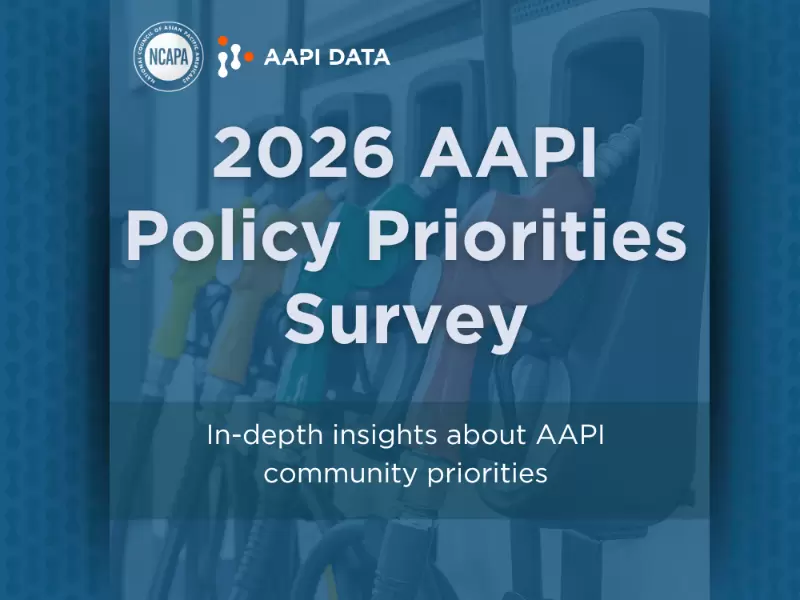 2026 AAPI Policy Priorities Survey / AAPI Vote
Asian American and Pacific Islander adults say the United States spends too much on immigration enforcement (72 percent) and military and defense (69 percent), according to a recent survey.
The 2026 AAPI Policy Priorities Survey, released by the National Council for Asian Pacific Americans and AAPI Data, points to a mismatch between community priorities and federal spending, with majorities saying the government spends too little on education (70 percent) and healthcare (68 percent).
Also Read: 7 in 10 AAPI adults say Trump abused military power
The findings come as Republican leaders in Congress advance a plan to unlock about $70 billion in funding for immigration enforcement, targeting agencies including Immigration and Customs Enforcement and U.S. Border Patrol.
Economic concerns dominate priorities
Against this backdrop, the survey shows AAPI voters are primarily driven by economic concerns. Cost of living and inflation remains the top issue at 58 percent, followed by war and foreign policy (46 percent), jobs and the economy (34 percent), and healthcare (30 percent).
Healthcare affordability emerged as the most concrete policy demand. About 83 percent of respondents said lowering prescription drug costs should be a top priority, alongside support for increased disease research funding (74 percent), expanded access for low-income individuals (67 percent), and youth mental health funding (65 percent).
Opposition to aggressive enforcement
On immigration, respondents expressed growing opposition to broad deportation policies and aggressive enforcement tactics. About 47 percent opposed deporting all undocumented immigrants, compared to 29 percent who supported it.
Majorities also opposed the use of masked agents without identification (73 percent) and large-scale immigration raids (59 percent), while 80 percent supported requiring body cameras for immigration agents.
Political trust and civil liberties concerns
A majority of respondents, 68 percent, said they prefer a larger government providing more services, compared to 31 percent who favor a smaller government.
On political trust, Democrats were favored over Republicans across key issues, including healthcare (47 percent to 10 percent), immigration (39 percent to 23 percent), and cost of living (35 percent to 14 percent). However, 38 percent of respondents said they were unsure or trusted neither party on the issue of cost of living.
Concerns over civil liberties were also significant, with 49 percent identifying freedom of speech as the most threatened right, followed by protections against unreasonable search and seizure (38 percent), privacy (36 percent), and press freedom (34 percent).
On artificial intelligence, large majorities supported stronger safeguards, with 75 percent opposing AI systems making final medical decisions, 69 percent opposing their use in education placement, and 68 percent supporting measures to prevent racial bias.
The survey also found rising concern about data privacy, with more than one-third of respondents expressing concern about the potential misuse of census, tax, and health data.
The poll was conducted March 23-30, among 1,336 respondents from a nationally representative panel of Asian American, Native Hawaiian, and Pacific Islander households. The margin of error is plus or minus 4.5 percentage points.
Discover more at New India Abroad.
ADVERTISEMENT

ADVERTISEMENT
E Paper
Video

Comments
Start the conversation
Become a member of New India Abroad to start commenting.
Sign Up Now
Already have an account? Login