ADVERTISEMENT
ADVERTISEMENT


Debate intensifies in U.S. Congress over allies' role in global security
Committee chairman Mike Rogers raised concerns about provisions in a strategy that shift more security responsibilities to U.S. allies.
-
 Lalit K Jha (IANS)
 - Thu, 05, Mar 2026
- 13:37 EST
- 70
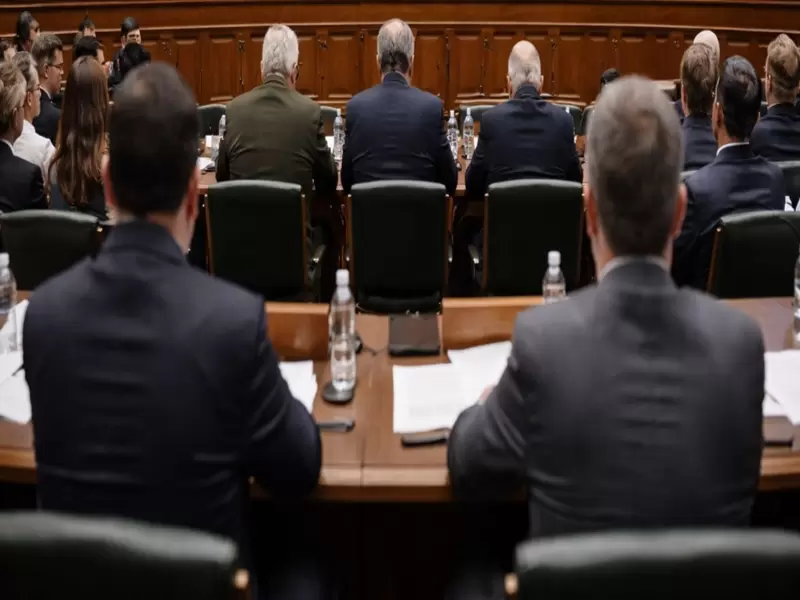 Representative Image / Courtesy: AI-generated
U.S. lawmakers sparred on March 5 over the role of allies in global security as Congress examined the newly released National Defense Strategy during a hearing of the House Armed Services Committee.
The debate highlighted differences between Republicans and Democrats on the extent to which allies should assume greater responsibility for defending their own regions while the United States focuses on major strategic priorities.
ALSO READ: Pentagon chief Hegseth says officers will stop attending Ivy League programs
Opening the hearing, committee chairman Mike Rogers said lawmakers were reviewing a strategy that guides U.S. military planning and resource allocation. He said the strategy has already shown progress in several areas, including homeland defense and the protection of U.S. interests in the Western Hemisphere.
However, Rogers raised concerns about provisions in the strategy that shift more security responsibilities to U.S. allies. He warned that pushing European allies to assume larger military roles too quickly could pose risks. “This is a recipe to guarantee failure and create a deterrence gap that Russia will exploit,” Rogers said.
He also criticized the decision to withdraw a U.S. brigade from Romania, saying that allies were not properly consulted before the move. “A brigade is not ‘little,’” he said.
Democrats, however, offered a sharper critique of the strategy and warned that it could weaken long-standing alliances and undermine global cooperation. Ranking member Adam Smith said the 2026 National Defense Strategy reflects an “America First” framework that raises concerns about U.S. commitments abroad.
“The 2026 NDS appears to abandon U.S. commitments to international norms,” Smith said. He added that the strategy also appears inconsistent with recent military actions undertaken by the administration.
Smith pointed to the president's military operations overseas and said they seem to contradict the strategy’s stated focus on avoiding prolonged conflicts. “The President’s appetite for military adventurism, to include Operation Epic Fury, appears to contradict the strategy,” he said.
Pentagon officials defended the strategy during the hearing, stating that it reflects a realistic approach to global security amid limited resources. Under Secretary of Defense for Policy Elbridge Colby told lawmakers that the strategy is based on President Donald Trump’s “America first, peace through strength” approach.
He said the United States must concentrate its military power on the most pressing threats. “The American military, while without peer, is not infinite in its application and resources,” Colby said. He said the strategy rests on several pillars, including defending the homeland, deterring China in the Indo-Pacific region, and rebuilding the U.S. defense industrial base.
Another key element of the strategy is burden-sharing. Colby said allies and partners must take a larger role in defending their own regions. The objective, he said, is for allies to assume “primary responsibility for their conventional defense." The strategy also aims to prevent China from dominating the Indo-Pacific while encouraging partners to strengthen their own military capabilities.
The National Defense Strategy outlines the Pentagon’s long-term military priorities and serves as a guiding document for defense planning. It also informs decisions on force posture, military spending, and alliance structures.
Congress reviews the strategy as part of its oversight responsibilities and uses it to shape defense policy and the annual National Defense Authorization Act.
Discover more stories on New India Abroad.
Leave A Comment
Related










ADVERTISEMENT

ADVERTISEMENT
E Paper
Video

Comments
Start the conversation
Become a member of New India Abroad to start commenting.
Sign Up Now
Already have an account? Login