ADVERTISEMENT
ADVERTISEMENT


The 2027 Kia Seltos Grows Up — And Thinks Bigger
The new platform stretches the wheelbase to 105.9 inches, bringing improvements in ride quality, cabin space and stability.
-
 Response Feature
 - Wed, 19, Aug 2026
- 12:10 EDT
- 39
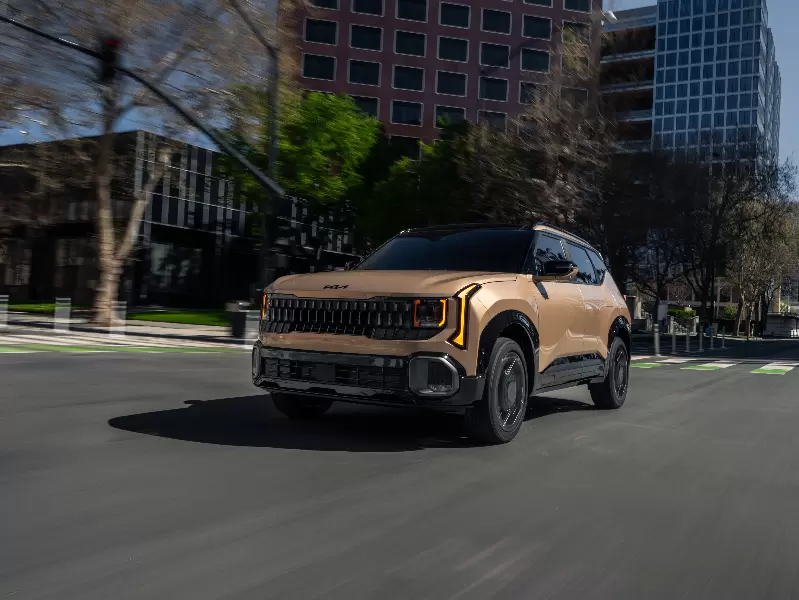 Kia Seltos SUV / Handout
There are redesigns that refresh a vehicle. Then there are redesigns that quietly redefine what a company believes it can be.
The all-new 2027 Kia Seltos belongs firmly in the second category.
For Kia, this is not simply the replacement of one compact SUV with another. It is an attempt to move the entry point of its SUV range closer to the experience of its flagship Telluride, while keeping the affordability that has become one of the brand’s defining strengths in the United States.
During a media preview, Kia executives repeatedly returned to a single phrase: “Elevate everything.” That was not presented as marketing shorthand. It served as the organising principle behind nearly every design, engineering and product decision that shaped the second-generation Seltos.
The result is a compact SUV that feels determined to challenge the traditional definition of an entry-level vehicle.
Inspired by the Telluride, not copying it
The visual connection to the Telluride is immediately apparent.
The upright proportions, broad shoulders and squared-off stance borrow heavily from Kia’s largest SUV without becoming a miniature replica. The signature lighting, the Tiger Nose grille, flush door handles on higher trims and cleaner body surfaces give the Seltos a more mature presence than its predecessor.
Stephanie Day, Kia’s Product Planning Specialist, described the philosophy simply.
“We took all of those design cues that everybody loved and incorporated into the Seltos from our flagship Telluride.”
She was equally quick to draw a distinction.
“It’s not a replica of the Telluride.”
That balance may ultimately become one of the vehicle’s greatest strengths. Rather than appearing like a scaled-down imitation, the new Seltos establishes its own identity while benefiting from the visual confidence that has made the Telluride one of Kia’s most recognisable products.
For buyers entering the showroom for the first time, the design communicates something important before the engine even starts: this is no longer merely the smallest SUV in Kia’s portfolio.
Bigger where it matters
Growth is a recurring theme throughout the vehicle.
The new platform stretches the wheelbase to 105.9 inches, bringing improvements in ride quality, cabin space and stability. Kia says the Seltos delivers class-leading second-row legroom, best-in-class cargo capacity behind the first row and increased overall passenger volume.
Numbers alone rarely tell the whole story.
Open the rear doors and the cabin immediately feels less constrained than one might expect from a compact SUV. Rear passengers benefit from generous legroom, reclining seatbacks, air vents and charging ports, while the flat cargo floor and folding rear seats make the space practical for everyday use.
Kia has also introduced thoughtful touches such as Add Gear cargo hooks, designed to secure bags, coats or other items without sacrificing luggage space.
These are small details, but collectively they reflect an understanding of how owners actually use compact SUVs—not just on weekend adventures, but during grocery runs, school pick-ups and daily commuting.
A cabin that no longer feels entry level
Perhaps the most dramatic transformation occurs inside.
The dashboard adopts a wider, more horizontal layout inspired by the Telluride, centred around dual digital displays that together provide nearly 30 inches of screen space on higher trims.
The design remains clean and uncluttered.
Technology has become increasingly central to customer expectations, yet Kia appears determined not to overwhelm drivers with complexity.
Wireless Apple CarPlay and Android Auto come alongside Kia’s latest connected infotainment system with over-the-air updates. Available features include the Kia AI Assistant, activated simply by saying, “Hey, Kia.”
Entertainment has also become part of the experience.
When parked, occupants can access streaming services including YouTube, Netflix and Disney+, turning waiting time into usable time. Whether collecting children after sports practice or taking a break during a road trip, the cabin becomes something more than just a driver’s seat.
Three powertrains, one clear strategy
Perhaps the boldest decision lies beneath the bodywork.
The Seltos becomes the only vehicle in its segment to offer three distinct powertrain choices.
Customers may choose between a naturally aspirated 2.0-litre petrol engine, a more performance-oriented 1.6-litre turbocharged engine or, later this year, an all-new hybrid model.
That breadth reflects changing consumer behaviour.
Not every buyer is ready to embrace a fully electric vehicle. Equally, many want greater fuel efficiency than conventional petrol engines provide.
The hybrid seeks to bridge that gap.
Kia says the forthcoming hybrid will feature an electrified all-wheel-drive system powered by electric motors, allowing additional traction only when required while helping improve efficiency.
Rather than forcing customers into a single electrification pathway, the Seltos allows them to choose the solution that best fits their needs.
It is a pragmatic approach at a time when much of the automotive industry continues to debate the pace of electrification.
Technology serving the driver
Modern vehicles often compete by adding screens and software.
The Seltos attempts something slightly different.
Its technology appears designed to reduce effort rather than demand attention.
Available features include Surround View Monitor, Blind Spot View Monitor, Front and Rear Parking Distance Warning, Hands-on Detection and an expanded suite of collision avoidance technologies.
James Bell of Kia captured the philosophy during the presentation.
“A vehicle loses its safety value if using the technology is taking you away from the driving experience.”
That observation reflects an increasingly important reality in automotive design.
Technology succeeds only when it becomes intuitive enough that drivers scarcely notice it working.
Who is the Seltos really for?
Kia repeatedly referred to Millennials and Generation Z during the presentation.
But the vehicle’s appeal appears considerably broader.
The company described two distinct customer groups.
One is the first-time new-car buyer, perhaps moving from a used sedan into a compact SUV.
The other is an experienced owner downsizing from a larger three-row SUV after children have left home.
Both seek practicality without giving up design or technology.
Stephanie Day explained that customers are keeping vehicles longer, meaning a car purchased today must remain useful through changing stages of life.
The Seltos attempts to meet that challenge by combining compact exterior dimensions with enough interior flexibility to accommodate young families, growing cargo needs and changing lifestyles.
It is, in many respects, designed not for a particular age group but for transition itself.
Value remains central
Perhaps the most surprising aspect of the new Seltos is not its styling or technology.
It is the price.
Kia confirmed that the line-up begins below $25,000, while continuing to offer premium equipment across multiple trims.
Company executives argued that periods of uncertainty often strengthen demand for vehicles delivering high perceived value without sacrificing quality or features.
During a question-and-answer session, executives were also asked whether US tariff policies had affected pricing.
Their response was measured.
Kia said it had maintained competitive pricing despite external pressures, explaining that its pricing strategy is driven primarily by competitive positioning rather than individual external factors.
The company also confirmed that the new Seltos will initially continue to be manufactured in South Korea while noting that it continues to evaluate opportunities for expanding production in the United States.
Final impressions
Rather than relying on one headline feature, it advances across nearly every measurable area: design, space, technology, practicality and future powertrain flexibility.
It does not try to become a luxury SUV.
Instead, it challenges the assumption that buyers entering the compact SUV segment must accept compromise.
That may ultimately become the vehicle’s defining achievement.
The Seltos no longer feels like the younger sibling in Kia’s family.
It feels like a confident member of it.
And in a market where consumers increasingly expect premium experiences without premium prices, that may prove to be exactly the right place to be.
(Disclaimer: The above is a sponsored post, the views expressed are those of the sponsor/author and do not represent the stand and views of New India Abroad or Indian Star LLC.)
Discover more at New India Abroad.
Leave A Comment
Related











ADVERTISEMENT

ADVERTISEMENT
E Paper
Video

Comments
Start the conversation
Become a member of New India Abroad to start commenting.
Sign Up Now
Already have an account? Login