ADVERTISEMENT
ADVERTISEMENT


America’s Next Declaration Must Defend the Human Mind
America remains the most powerful nation in the world, yet it increasingly appears unable to convert power into order.
-
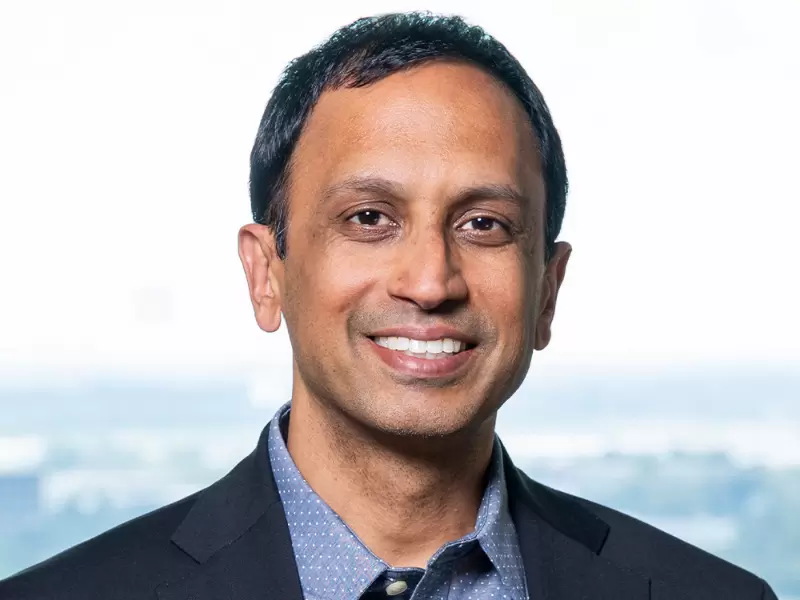
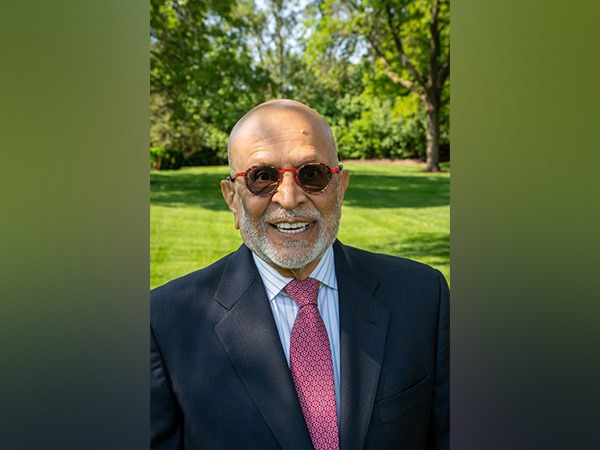 Vivek Singhal
 - Thu, 20, Aug 2026
- 23:56 EDT
- 25
 Dominion and Dharma book cover / Courtesy photo
In 1893, Swami Vivekananda stood before the World’s Parliament of Religions in Chicago and began with five immortal words:
“Sisters and Brothers of America.”
The power of that sentence came from its moral imagination. Vivekananda did not address Americans as members of a rising industrial power. He addressed them as kin.
The setting mattered. The World’s Columbian Exposition celebrated machinery, electricity, transportation, architecture and America’s emergence from the shadow of Europe’s old industrial empires. Steam, steel, factories, fleets and finance had defined power. The center of gravity was shifting westward.
Today, the world is passing through another civilizational transition.
The steam engine has given way to the cognitive engine.
Artificial intelligence converts data into prediction, prediction into influence and influence into power. Synthetic biology turns life into a programmable system. Neurotechnology may soon alter how memory, emotion, perception and identity are understood. Artificial general intelligence, if achieved, could transform labor, security, science and government.
America remains the most powerful nation in the world. Yet it increasingly appears unable to convert power into order.
Global conflicts persist. NATO faces pressures over burden-sharing, mission and technological dependence. BRICS countries seek greater financial and strategic autonomy. The dollar remains dominant, but its long-term supremacy can no longer be treated as automatic. The Western development model is being challenged by inequality, debt, social fragmentation and competing forms of state-led modernization.
The deeper crisis, however, is not merely geopolitical.
It is a crisis of governance, purpose and identity.
The DDDI framework — Dominion, Dharma, Destiny and Identity — offers a way to understand what America must do next.
Dominion: Power Must Be Governed
Dominion is the capacity to shape conditions.
America possesses extraordinary dominion through its military, financial system, universities, technology companies, alliances, research institutions and cultural reach.
But the nature of dominion has changed.
The old empires governed territory. The new technological powers govern data, platforms, models, biological systems and human attention.
The book Attensity! describes the modern attention economy as a form of “human fracking.” The metaphor is powerful because digital systems increasingly penetrate fear, desire, curiosity, loneliness and habit, then convert those reactions into profit and influence.
Human beings become extractive territory.
Attention becomes a commodity.
Identity becomes data.
A nation that cannot protect the attention of its citizens cannot preserve democratic self-government. Citizens may retain the right to vote while losing the capacity to judge. They may possess freedom of speech while algorithms determine what is visible, amplified or ignored.
America’s first responsibility in the age of AI is therefore not domination. It is governance.
Dharma: Power Creates Duty
Dharma asks what obligations arise from power.
A nation leading in artificial intelligence has responsibilities beyond corporate profit. A nation advancing synthetic biology has duties beyond scientific prestige. A nation developing neurotechnology must protect mental privacy and cognitive freedom.
Technical capability does not create moral permission.
Efficiency is not legitimacy.
Prediction is not wisdom.
Intelligence is not conscience.
America’s technological Dharma must be based on a simple principle: Human beings cannot be reduced to users, data points, biological platforms or targets of manipulation.
No state, corporation or machine should possess unchecked power over the mind.
Destiny: The Future Is Being Designed
America has often spoken of destiny as inheritance. But in the technological age, destiny is not inherited.
It is designed.
Once systems are built around surveillance, they do not naturally evolve toward privacy. Once platforms profit from compulsion, they do not voluntarily protect attention. Once autonomous weapons compress decision-making, they do not become cautious through rhetoric.
The future will reflect the architecture we create now.
One possible future is algorithmic empire, controlled by a small number of governments and corporations.
Another is fragmented techno-nationalism, with rival blocs weaponizing AI, supply chains, currencies, biology and information.
A better future is constitutional technological pluralism: nations compete, but within shared boundaries that protect human dignity, cognitive liberty and civilizational survival.
America’s highest destiny is not permanent supremacy.
It is helping create an order in which no power — including America — can convert technological superiority into absolute domination.
Identity: Republic or Platform?
America’s strategic crisis is also an identity crisis.
Is America a republic or an empire?
Is it a constitutional community or a commercial platform?
A republic requires limits. An empire seeks reach.
Democracy requires deliberation. Platforms reward reaction.
Citizenship requires shared reality. Algorithms reward fragmentation.
This is why the attention crisis is inseparable from the crisis of American identity.
A civilization must be able to decide what deserves sustained attention. Without that capacity, it cannot understand its past, govern its present or design its future.
Libraries, museums, schools, parks, houses of worship, community organizations and artistic spaces are therefore not luxuries. They are infrastructure for democracy because they create sanctuaries where attention is cultivated rather than harvested.
India’s Civilizational Contribution
Vivekananda’s message remains essential because he offered a model of civilizational confidence without civilizational domination.
He did not ask India to become a copy of the West. He did not reject modernity. He argued that civilizations could meet without one erasing the other.
That lesson matters as India rises and as BRICS gains influence.
The future should not be organized around Western supremacy or an anti-Western reversal. It should be built through civilizational negotiation.
India can contribute a language of duty, restraint, plurality and human purpose to a technological world increasingly obsessed with speed, scale and control.
A Cognitive Declaration of Independence
The Declaration of Independence of 1776 asserted that governments must respect rights that precede political authority.
The age of AI requires an extension of that principle:
All persons possess an inviolable claim to the integrity of their minds, bodies, attention, identities and biological inheritance, and no government, corporation, machine or movement may convert those faculties into instruments of control without informed and revocable consent.
This does not replace America’s founding declaration.
It carries its moral logic into the cognitive age.
The original Declaration rejected rule without consent.
The next declaration must reject prediction, manipulation and modification without agency.
Vivekananda began by addressing Americans as sisters and brothers. The technological age now asks whether humanity can still recognize itself as a moral family before machines, markets and empires define us only as resources.
America’s next mission should not be to capture the world’s attention.
It should be to help liberate humanity’s capacity to decide what deserves attention.
Discover more at New India Abroad.
Leave A Comment
Related







ADVERTISEMENT

ADVERTISEMENT
E Paper
Video

Comments
Start the conversation
Become a member of New India Abroad to start commenting.
Sign Up Now
Already have an account? Login