ADVERTISEMENT
ADVERTISEMENT



SOAS Leicester Report: A masterclass in academic gaslighting
The dismantling of the report’s narrative is furthered by the lack of forensic evidence.
-
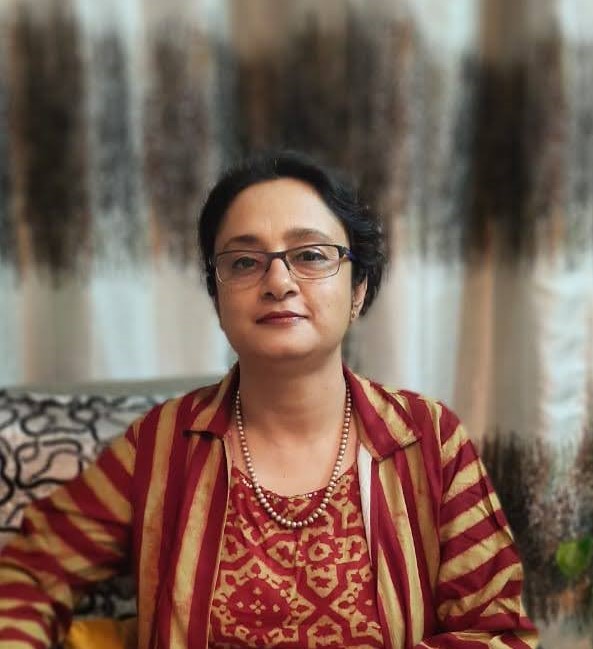 Dr. Vinay Nalwa
 - Fri, 27, Feb 2026
- 14:33 EST
- 205
 Representative Image / soas.ac.uk
Recently, a 200-page report titled “Better Together: Understanding the 2022 Violence in Leicester” was released by an independent inquiry associated with SOAS University of London and the London School of Economics (LSE). Chaired by Juan E. Méndez and funded by the Open Society Foundations, the document aims to address the root causes of the unrest that shook the East Midlands city.
However, beneath its academic veneer lies a problematic narrative. By applying an "imported lens" of South Asian communalism to a peaceful UK micro-minority, the report constructs a framework where Hindu victimhood is erased and replaced by a theory of "organized extremism." When the city’s own Mayor, Peter Soulsby, publicly questions the "independence" and "transparency" of such an inquiry, we must look deeper into the semantic and institutional biases that allow a law-abiding community to be so fundamentally misread.
The 2022 Leicester unrest was a watershed moment for the Global Hindu Diaspora, but the latest SOAS-LSE report, seeks to turn the victim into the villain. While the report’s executive summary claims a neutral stance, stating "no single community was responsible" the body of the text reveals a calculated Narrative Trap.
Also Read: UK Hindu groups reject report on Leicester Violence as “biased”
By dedicating entire chapters to "Hindutva" and "Hindu Extremism," the authors engage in a classic sleight of hand: they pathologize the cultural identity of a law-abiding community to create a false equivalency with radical transnational movements.
The Selective Clock: A Counter-Timeline of Truth
The SOAS-LSE report performs a curious feat of chronological editing. It starts its "clock" with a single street scuffle in May 2022 to frame Hindus as the primary aggressors. However, a forensic look at the months leading up to the riots reveals a much darker reality of territorial intimidation.
Phase I: The Silent Intimidation (May – August 2022)
-
May 2022: A street scuffle occurs. The SOAS report weaponizes this as the "First Strike." The Reality: Local Hindus report months of "simmering friction" and "territorial policing" by radical groups in East Leicester, who viewed Hindu cultural expression as an intrusion into "their" areas.
-
August 28, 2022: India wins a cricket match. Celebrations in the Belgrave area (a Hindu-majority hub) are met with organized "counter-protests."
-
The "Nazi" Labeling: Immediately after the match, social media accounts (like "tragicBud") begin spreading videos of the celebrations with captions like "Nazi Hindutva rampage." This was the birth of the Narrative Machinery, transforming a sports celebration into a "political threat" without a shred of evidence.
Phase II: The Escalation of Sacrilege (September 4 – 16, 2022)
-
September 4, 2022: Following a second cricket match, a Hindu man is stabbed in the arm. The report downplays this as "tensions," yet treats the May scuffle as a "monumental trigger."
-
The Ganesh Chaturthi Attacks: Hindu families celebrating at home are targeted. In one documented incident, eggs are thrown into a home where a Ganesh puja is being performed.
-
The Voluntary Curfew: Fearing for their safety, Hindu families in East Leicester begin a "voluntary curfew." Elderly residents report turning off lights and hiding in silence as masked mobs roam their streets.
Phase III: The "Micro-Terror" and Temple Desecration (September 17 – 20, 2022)
-
September 17, 2022: The "Belgrave March." 300 Hindus march to protest weeks of intimidation. The SOAS report calls this "aggression" because they walked into a "Muslim area." The Reality: This was a desperate plea for "Safety and Presence" in a city where they felt abandoned by the police.
-
September 18, 2022: The Shivalaya temple is targeted. A masked man from among the 400 mob protesting against Hindu March, climbs the temple wall and tears down and burns the Saffron flag.
-
The "Haram" Shield: The SOAS report uses "interviews" to claim Muslims "protected" the temple. This is a classic gaslighting tactic, praising the "restraint" of a 400-strong mob while ignoring the fact that the mob's very presence at a house of worship was the primary threat.
Phase IV: The Final Verdict of Truth (2025 – 2026)
-
August 2025: A UK High Court ruling debunks the "Hindutva involvement" conspiracy. The court finds zero evidence of organized RSS/Hindutva activity in the riots.
-
February 2026: Despite the High Court ruling, the SOAS-LSE report is released, recycling the same debunked "Hindutva" theories and calling for the "isolation" of Hindu groups.
The Semantic Divide: Rebranding Dharma as ‘Communalism’
The SOAS-LSE report’s deepest failure is a "category error" that misreads spiritual expression as political provocation. By framing the chant “Jai Shree Ram” and the Saffron flag through the lens of "militant nationalism," the inquiry effectively criminalizes the devotee.
The report admits these symbols express "the glory of God" and "purity," yet it pivots to label them "calls to arms" that "invoke fear." This pathologizes Hindu identity, treating a lived spiritual experience as a sinister political ideology.
Furthermore, the report’s definition of “Communalism” creates a false equivalency. By equating it with "UK Racism," the authors ignore the micro-minority status of Hindus in Leicester, assuming a power dynamic that simply does not exist.
This rebrands Dharma, the natural instinct to protect one’s culture, as "Communal Superiority," stripping the community of its minority protection and recasting defensive anxiety as supremacism.
Finally, the report engages in "semantic gymnastics" regarding the Shivalaya Mandir. While admitting the temple’s flags were "ordinary religious decorations," it frames the 400-strong mob outside as a "precautionary measure." By praising the "restraint" of a mob it justifies sacrilege under the guise of academic analysis.
The dismantling of the report’s narrative is furthered by the lack of forensic evidence. While the authors theorize about "Hindutva instructors" and "militant nationalism," they admit throughout that they have "no evidence of their involvement" and were "unable to obtain" the videos they claimed existed.
This creates a logic gap between The Forensic Reality: The Henry Jackson Society (2022) and a UK High Court ruling (2025) found zero evidence of organized RSS or Hindutva activity in the Leicester riots.
The report states that , “the investigations did not find Hindutva extremist organisations operating in Leicester, but instead discovered a micro-community cohesion issue falsely presented as an issue of organised Hindutva extremism and terrorism. It finds that false allegations of Hindu extremism has put the wider Hindu community at risk from hate, vandalism and assault. Some members of the Hindu community in Leicester imposed a voluntary curfew, some relocated to stay with family or friends until they felt safe to return, while still others were unable to return to work owing to fears for their personal safety.
The Academic Theory: Despite the lack of evidence, the SOAS report still recommends that Hindus "isolate Hindutva." This suggests that the "motive and purpose" of the report, bolstered by a £620,000 grant from the Open Society Foundations currently under ED scrutiny in India was not to find the truth, but to validate a predetermined theory of "Hindu Extremism."
A truly independent inquiry must account for the full context: the Ganesh Chaturthi attacks, the stabbings, and the derogatory use of slurs like "mushriks" against a micro-minority. The danger of Academic Hinduphobia is that it provides a "scholarly" cover for future violence. By labeling Hindus as "communalists," institutions create a vulnerability that radical actors will exploit.
To build genuine cohesion, the academy must stop treating the Hindu diaspora as a laboratory for anti-India political agendas. True pluralism is built on Dharma—recognizing diversity as a natural expression of the cosmos, not a political conflict to be "managed" by biased reports. We must reject the "Communalism" tag and return to a discourse that respects the civilizational integrity of a community defined by peace and contribution. If we are to learn from Leicester, we must put context ahead of narrative and evidence ahead of assumption.
The writer is an author and columnist.
(The views and opinions expressed in this article are those of the author and do not necessarily reflect the official policy or position of New India Abroad.)
Discover more stories on New India Abroad.
Leave A Comment
Related

.png)



ADVERTISEMENT

ADVERTISEMENT
E Paper
Video

Comments
Start the conversation
Become a member of New India Abroad to start commenting.
Sign Up Now
Already have an account? Login