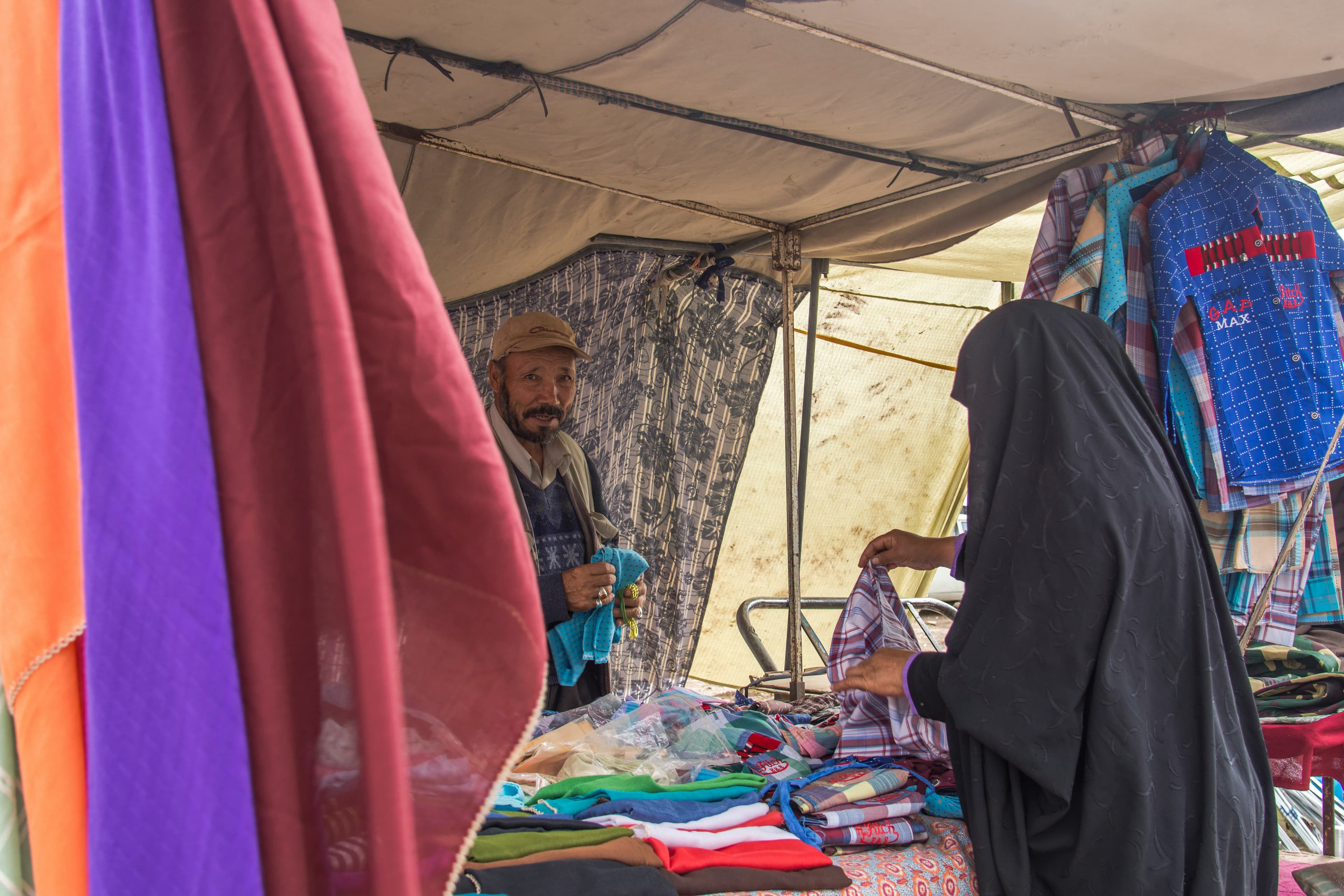
Representative image / Unsplash
“I see numbers of children on the floor begging for food,” says a worker during his frequent trips to the mosque.
“They say their children haven’t eaten all day, that they don’t have a roof over their heads.”
The organization I work for, Afghan Women Forward, known as ABAAD, aims to provide desperately needed aid to the Afghan people. We focus on supporting victims of domestic violence and offer skill-building programs that help women live independently, economically and physically. Through my work, I have had the chance to speak with several women and children living in Afghanistan.
Afghanistan, once a fixture in the daily news cycle in the United States, has largely faded from global attention as the world has moved on. But conditions for its people are dire and continue to worsen.
According to the United Nations, an estimated 22.9 million people, more than half of Afghanistan’s population, require humanitarian assistance to survive. Poverty disproportionately affects women for multiple reasons. In August 2021, the Taliban issued an order barring girls from attending secondary school, citing reasons ranging from uniform concerns to curriculum reviews. This resulted in an immediate halt to education for girls beyond sixth grade.
ALSO READ: Trump sharpens focus on legal immigration
The Taliban also imposed a ban on women working for international humanitarian organizations, according to the Center for Strategic and International Studies. Following the ban, many major aid organizations operating in Afghanistan suspended their activities, saying they could not continue without full staffing. The move effectively paused more than $46 million in assistance in 2022, further worsening conditions for people dependent on aid.
Climate change has compounded the crisis. Severe droughts and limited access to water affect much of the country. Families without shelter often live in tents, and their children cannot attend school. While boys are technically allowed to continue education, many families cannot afford basic supplies such as pens and notebooks.
As of Nov. 27, 2025, the United States has paused all visa issuances to Afghan nationals, leaving those seeking to flee Afghanistan without a pathway to safety in the U.S. President Donald Trump said on Nov. 26 that the United States “must now re-examine every single alien” who entered the country from Afghanistan during the Biden administration.
Pakistan has also pledged to expel Afghan nationals and has removed more than a million Afghan families over the past few years. Many of those expelled sleep outdoors after crossing the border, exposed to extreme heat and harsh winds. Illness is common, and medical care is scarce. While ABAAD provides aid where possible, the scale of need far exceeds available resources.
Jamila and her children, Maryam, 3, Ali, 9, and Abdul, 8, whose names have been changed for security reasons, live in Kapisa province with their grandfather. Jamila has not seen her husband since he abandoned the family. In Afghanistan, a national identification document known as a tazkira is required to access education, health care and social services. Until recently, only male household members could obtain one, and some women are still required to bring a male witness.
Without tazkiras, Jamila’s children cannot attend school and rely on external aid. The family works agricultural land in often dangerous conditions. During winter, the land becomes unusable, eliminating their only reliable food source. Food insecurity remains widespread, and children are among the most affected.
Save the Children reports that parents are being forced to take extreme measures, including withdrawing children from school, sending them to work, or, in some cases, selling children to cover debts or buy food.
Yashfa, also from Kapisa, grew up with a father struggling with substance use disorder. While attending university, she became pregnant after entering a relationship with a man who provided her educational support. Because the pregnancy occurred outside marriage, she was jailed for two years and gave birth to her daughter, Iman, in prison. After the Taliban takeover, she and her child were expelled from a women’s shelter and forced to return to her abusive family.
Members of her community have attempted to harm Iman due to perceptions of dishonor. During nine months of assistance, ABAAD provided food and support and successfully helped secure a tazkira for Iman, allowing her to begin school.
Zahra fled a forced exchange marriage arrangement involving her 12-year-old daughter and sought refuge in a women’s shelter, where her son Aazar was born. After the Taliban takeover, she and her children were expelled and forced to beg in public spaces. ABAAD has supported them with food, shelter, medical care and security. Aazar suffers from a life-threatening illness and now lives in a rental home provided by ABAAD.
Amina, who grew up in a shelter herself, married a man with severe psychiatric conditions. After complications during pregnancy forced her to stop working, violence escalated. Her infant son is malnourished, and her daughter has been repeatedly beaten. ABAAD now provides food, medicine and financial assistance.
Najiba, forced into marriage due to her family’s gambling debts, endured years of abuse. ABAAD supported her financially and enrolled her in tailoring classes to help her gain independence. She now receives psychological support, though her recovery remains ongoing.
Despite the hardships, moments of hope persist. Yasamin, an ABAAD student, was accepted to the University of Bologna after completing a Duolingo preparation program. ABAAD also teaches English, programming and coding to young girls, helping them develop skills to support their families.
Aid dependency is not sustainable. Education, vocational training and employment are essential for survival and dignity. With continued support, ABAAD can empower Afghan women to build safer, more independent futures.
As aid and global attention dwindle, the lives of women and children in Afghanistan continue to deteriorate. The world must not turn away.
Daily life, a worker at ABAAD said, is “a mix of pain, uncertainty and survival. The sense of hope, security and peace has been almost entirely removed. In this oppressive environment, they feel imprisoned in a world without a future.”
ADVERTISEMENT
ADVERTISEMENT
Comments
Start the conversation
Become a member of New India Abroad to start commenting.
Sign Up Now
Already have an account? Login