ADVERTISEMENT
ADVERTISEMENT



U.S. Congressmen play down trade frictions, stress long-term India ties
Despite disagreements, both lawmakers said the strategic logic of cooperation remains overwhelming.
-
 IANS
IANS - Tue, 13, Jan 2026
- 02:22 EST
- 100
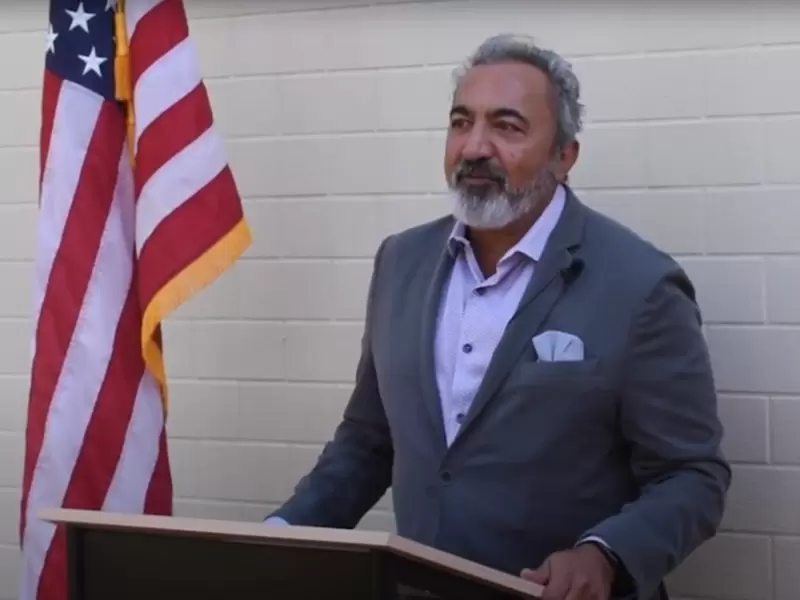 Ami Bera / Screengrab from press conference
U.S. lawmakers acknowledged persistent trade frictions with India but stressed that both sides remain committed to a long-term strategic and economic partnership that goes beyond short-term disputes over tariffs, visas, and market access.
Speaking at a CSIS event, Representative Ami Bera said that despite periodic tensions, the underlying trajectory of the relationship remains strong. “When you talk to the business community, they’re playing the long game here. They get it,” he said.
Bera recalled his visit to India during a period of heightened friction. “I left on a Friday, landed on Saturday, and we’re hit with $100,000 H-1B visa issues… 50 per cent tariff. So there was a lot of friction points,” he said. “But the truth is… they get it.”
He emphasized that U.S. companies continue to view India as a primary destination for investment. “You don’t see American companies making multibillion-dollar investments in Pakistan. That’s all happening in India,” Bera said.
ALSO READ: U.S. Congress backs India as pillar of global stability
Representative Rich McCormick said economic disagreements should be viewed through a broader strategic lens. “We have to make sure there’s balance there, that there’s equal buy-in,” he said, adding that perfect symmetry is unrealistic. “It’s not going to be perfectly balanced. Anybody who’s married understands that.”
McCormick described himself as a pro-trade lawmaker skeptical of punitive tariffs. “I’m a fair trade guy. I’m actually a guy who believes that tariffs are antithetical to capital growth,” he said.
He argued that economic openness ultimately benefits societies. “If you think about what’s good for business, it’s good for people. Upward mobility,” McCormick said, drawing on his background as an emergency room physician.
The lawmakers also addressed agriculture, a sensitive issue in U.S.–India trade talks. McCormick noted India’s self-sufficiency. “India… actually, it’s self-sufficient for agriculture, which is impressive for a country of over 1.4 billion people,” he said, while suggesting niche markets could still expand.
Bera acknowledged political realities in India. “The agricultural piece is just difficult with India… because of the subsistence farmers,” he said, referencing protests over farm policies.
McCormick noted that India’s population and growth trajectory offer long-term advantages. “India’s one of only two places in the world that’s still expanding its population,” he said.
He also cited India’s technological efficiency. “They just put a spaceship on the dark side of the moon for under $80 million… not billion, million dollars,” McCormick said.
Bera said economic engagement has continued despite diplomatic noise. “You still see the high-frequency data on trade and investment still show a real uptick,” he said.
The lawmakers stressed that Congress understands India’s domestic constraints, including energy needs. McCormick said buying discounted Russian oil, while controversial, reflected India’s priorities. “He’s doing it for the best interest of his country so he can expand his economy with cheap energy,” he said.
Despite disagreements, both lawmakers said the strategic logic of cooperation remains overwhelming. “We’re playing the long game,” Bera said.
Read more stories on NewIndiaAbroad
Leave A Comment
Related









ADVERTISEMENT

ADVERTISEMENT
E Paper
Video

Comments
Start the conversation
Become a member of New India Abroad to start commenting.
Sign Up Now
Already have an account? Login