ADVERTISEMENT

ADVERTISEMENT

A ticking clock for Green Cards: Charles Foster on EB-5, the September deadline, and the future of immigration

The EB-5 deadline was the sharpest edge of the conversation, but Foster used the hour to offer something wider: a clear-eyed account of where American immigration policy stands.

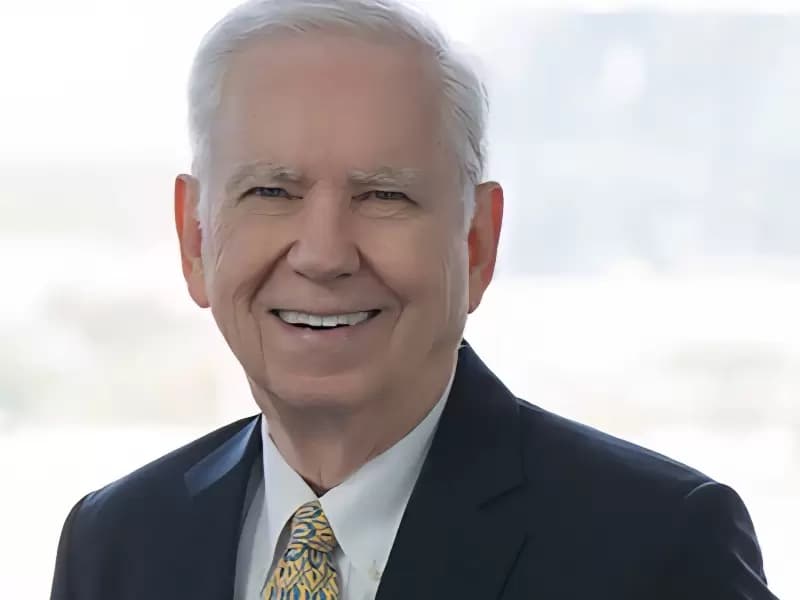
 Charles C Foster Charles C Foster / Handout

Charles Foster has spent five decades navigating the machinery of American immigration law. He has advised presidents, testified before Congress, and guided thousands of individuals and companies through a system that—by his own candid assessment—has never been more complicated, more unpredictable, or more consequential than it is right now.

When he returned to the studio of Open Forum FM 103.5 for the IACCGH Business Hour, he arrived, as always, with facts—and this time, with a deadline that he described as one of the most urgent he has communicated in years. 

“If you don’t file by September 30th,” he said, cutting through every qualification with characteristic directness, “we do not know exactly what the law will be after that date.”

The Backlog Nobody Talks About Honestly

To understand why that deadline matters, Foster first asked his audience to understand a number that tends to disappear inside bureaucratic language: 20 to 30 years.

Also Read: Houston's Office of Business Opportunity brings contracts, certifications, and clarity to IACCGH

That, he said, is the realistic waiting period for Indian nationals seeking employment-based permanent residency in the United States today. Not the 13 years stated on paper in the visa bulletin — but as he explained, when monthly advancement sometimes moves by only two weeks, the true arithmetic points somewhere far darker. “If you multiply two times 13,” he said, “that’s a 26-year waiting period.”

The root cause is a structural problem that Congress has failed to address since 1990: a 7% per-country cap that limits how many visas any single nation can use, regardless of how much demand exists. India, which sends the largest Asian immigrant population to the United States, bears the full weight of that cap. The quota itself hasn’t been increased in 36 years. “We’re a much larger country,” Foster noted. “We can do that.” And yet Congress hasn’t.

What makes this backlog more than a bureaucratic inconvenience is what it does to real families. Many Indian nationals arrived years ago on H-1B visas, built careers, and had children — children who grew up in American schools. As those children approach adulthood, a quiet catastrophe looms. “When their son or daughter turns 21,” Foster said. “They lose their status.”

 The EB-5 Window — And Why It’s Closing

Against that backdrop of decades-long waits and aging-out children, the EB-5 Investor Visa program has represented something genuinely unusual in the American immigration system: a pathway with no backlog.

Created by Congress in 1990 as a job-creation initiative, EB-5 was later amended to allow investment through regional center projects — pooled investments in large-scale developments like the gleaming condominium towers and office buildings that have reshaped Houston’s skyline. The minimum investment for a project in a Targeted Economic Area is $800,000, structured effectively as a five-year loan. “You make a five-year $800,000 loan,” Foster explained, “you get your lawful permanent residency for you and your immediate family — your spouse and children under 21 — and you get your money back after five years, plus interest.”

No 20-year wait. No per-country cap. No lottery. For an Indian national currently on an H-1B visa watching a multi-decade queue stretch out ahead of them, it is the only viable near-term path to a green card. “If you don’t do this by that date,” Foster said, “the option is through employment—and that could be literally a 20 to 30-year waiting period.”

But the program is sunsetting. September 30, 2026, is the date Foster kept returning to — the last point at which an EB-5 investment can be made under the current, known rules. The program technically runs for one additional year through September 30, 2027, but that window comes with no protections. “During that last year, you’re not grandfathered,” he warned. “Congress, the administration — they can change it any way they want to. So you could, in theory, invest after this September 30th and the rules of the game could change right in the middle after you have made an investment.”

Complicating things further is a proposal from the Trump administration to transform EB-5 into something entirely different — a pure gift program requiring $1 million with no return. For a family of four, that would mean $4 million. No jobs created. No money back. “It’s your ticket to get a green card,” Foster said, not without irony. He was clear about his assessment of its legal footing: “I think that proposal has no legal basis.” But its existence signals what this administration intends to do with the program if given the chance.

What “Doing It Right” Actually Means

With stakes this high, Foster spent considerable time explaining how to navigate the EB-5 process without losing either the green card or the investment. The safest approach, built on his firm’s experience with thousands of cases, is to invest through a regional center project with a documented track record.

“Pick the right project,” he said — one backed by a developer that has successfully completed multiple EB-5 rounds and consistently returned investor funds. Many of the projects Foster pointed to are substantial enterprises raising $40 to $60 million, for which the EB-5 portion is a relatively small slice of low-interest financing. “They really don’t need your money,” he noted. “So, if you pick the right project, everyone gets their money back.” The only cases where his firm has seen problems, he said, involved direct investments — where someone invested in their own business, which subsequently failed. Regional center projects, chosen carefully, carry a fundamentally different risk profile.

The source of the $800,000, he noted, can be flexible — personal savings, a gift, or a loan. “If you have a relative here,” he said, walking through a scenario involving a family member who owns a business, “you can loan it to them — and they can invest it.” What matters is the documentation of the source. “You’ve got to pick the right lawyer,” he added, “because otherwise you’re lost in the sauce out there.”

A Broader Reckoning

The EB-5 deadline was the sharpest edge of the conversation, but Foster used the hour to offer something wider: a clear-eyed account of where American immigration policy stands — and where it has been failing for decades.

On the H-1B program, he delivered a sobering figure: the odds of successfully obtaining an H-1B visa today may be no better than 30%, thanks to the 65,000-per-year numerical cap and increasing scrutiny from the current administration. On the May 21st policy memorandum declaring adjustment of status “rare and exceptional” — a measure affecting EB-5 applicants who might prefer to finalize their green cards domestically—he was characteristically blunt: “There is nothing in the law that says that. They made that up from whole cloth.” Lawsuits, he predicted with confidence, will follow across multiple federal districts.

On the broader state of Congress, Foster was equally frank. “We’ve never had a worse Congress in the area of immigration,” he said, and traced that dysfunction to a political reality that has calcified over years: a significant faction of the current Republican majority that opposes not just undocumented immigration but all immigration. “It’s very hard to get sufficient votes,” he said. “Except for white South Africans being admitted as refugees.”

The international picture carries its own warning. Applications from Indian students to American universities are declining—not because of any official cap, but because the climate has changed. “A number of students are selecting out,” Foster observed. “They read about difficulties here.” Australia, Canada, and European countries, he noted, are actively capitalizing on that hesitation. “They’re making hay while the sun shines,” said one host. Foster agreed.

The Case That Never Gets Old

When the conversation turned to the broader contribution of immigrants to American life, Foster returned to the argument he has made for decades — one that data has never stopped supporting.

“Half of all Fortune 500 companies were started by immigrants or their children,” he said. Americans who win the Nobel Prize in science are “essentially all immigrants or the children of those immigrants.” And as the country’s birth rate continues to decline, the demographic math becomes increasingly stark. “We are only growing as a city, as a county, as a state, as a nation essentially through immigration,” he said. By 2050, projections suggest China will have half its current population. Russia faces a similar trajectory. America, unlike those nations, has a mechanism to prevent that future — if it chooses to use it.

“Immigrants continue to refresh the American spirit,” Foster said. “They bring the energy.” It was the note he always returns to — the observation that has remained true across every administration he has worked with, in every decade he has practiced.

The window for some of those immigrants to secure their future here may close September 30th. Foster’s message to anyone for whom the EB-5 pathway is viable was as clear as he could make it.

“The next three months,” he said, “are very critical.”


Discover more at New India Abroad.

Comments

Related