ADVERTISEMENT
ADVERTISEMENT



How Punjabi music is reshaping India’s soft power
For the families who came to Canada, the UK, or Australia as labourers, farmhands, and shopkeepers, this is not an abstract cultural statistic.
-
1783371076.png) Rashi Randev
Rashi Randev - Mon, 06, Jul 2026
- 16:51 EDT
- 53
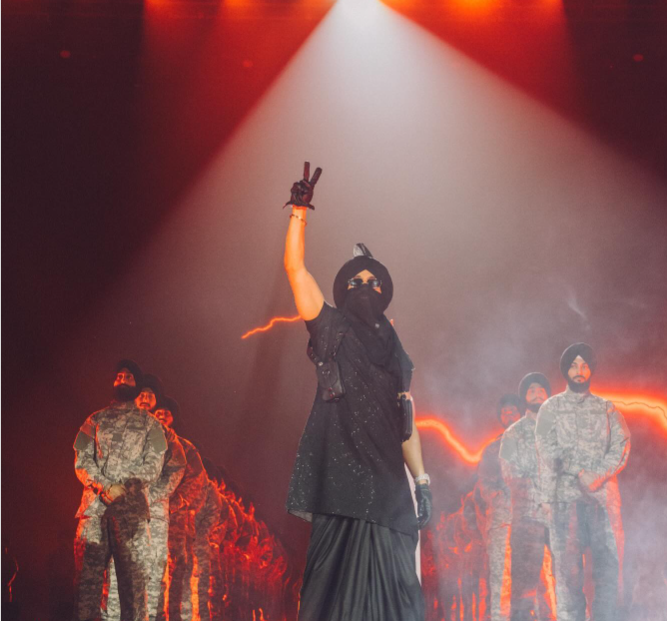 Diljit Dosanjh on stage / Instagram @DILJIT DOSANJH
There is a particular sound that announces Punjab before you even see it: the dhol. It shows up at weddings, at harvest time, at the slightest excuse for celebration, and it carries a kind of joy that doesn’t need translation.
That same instinct, the urge to turn feeling into rhythm, has quietly carried Punjab from the wheat fields of north India to stadiums in Toronto, arenas in London, and festival stages in California. Somewhere along the way, a regional folk tradition became one of India’s most effective ambassadors.
Also Read: Diljit Dosanjh-starrer 'Satluj' taken down days after OTT release
This is what foreign policy people call soft power, though Punjab never asked for the label. Soft power is the influence a place earns without trying to win an argument, the pull of its food, its festivals, its music, the feeling people get when they encounter its culture and want more of it.
Governments spend decades building this kind of goodwill through summits and statements. Punjab built it through bhangra beats and a stubborn refusal to be anything other than itself.
What makes the story worth telling is how little Punjab compromised to get here. The music stayed rooted in dhol rhythms, in Gurmukhi lyrics, in the cadences of Punjabi folk singing even as it picked up hip-hop, R&B, and electronic production along the way. It didn’t dilute itself to travel. It simply got louder, and the world leaned in to listen.
Born in Punjab, Carried Across the World
Three names tell this story best: Diljit Dosanjh, Karan Aujla, and AP Dhillon. Each grew up with Punjab in his bones, and each has carried a piece of it somewhere it had never quite reached before.
Diljit Dosanjh’s Coachella set was the moment many people outside the diaspora first heard Punjabi sung on a stage that size. It wasn’t just a good show. It was a Punjabi farmer’s grandson, in a turban, singing in his mother tongue to a crowd that didn’t need the words translated to feel what he meant.
His appearance on The Tonight Show afterward confirmed something that had been building for years: Punjabi music no longer needed Bollywood’s permission to be heard globally. The Los Angeles City Council made it official in its own way, declaring January 6, 2027, his birthday, as Diljit Dosanjh Day, in recognition of his contributions to music, culture, and South Asian representation in mainstream American entertainment.
No Punjabi artist had come close to that kind of civic acknowledgement before. Dosanjh never softened his Punjabi-ness to get the invitation. He brought it with him, fully intact, and that honesty is exactly why audiences trust him.
Karan Aujla’s rise tells a different part of the story, the part that happened on phone screens rather than film sets. His sharp, self-assured style found a young diaspora audience first, on TikTok and Instagram, before it found arenas.
He has gone on to sell out venues and break ticket records that once seemed reserved for much bigger, much older global acts. When he won the TikTok JUNO Fan Choice award, it wasn’t a crossover prize handed down from the mainstream; it was proof that Punjabi music had built its own mainstream, with its own rules and its own fans.
AP Dhillon’s story is the most personal one, in a way. A Punjabi-Canadian who grew up between two homes, his music doesn’t treat Punjab and the diaspora as separate worlds; it moves through both at once, the way people who’ve actually lived that life do.
His sound borrows comfortably from R&B and pop, but it never forgets where it started. For a generation of young Punjabis growing up far from their grandparents’ villages, that matters more than charts or awards. It tells them their inheritance is not something to leave behind to fit in elsewhere.
More Than Music: A Story About Belonging
What’s easy to miss in the headlines about streaming numbers and sold-out tours is the quieter thing actually happening: a community that left Punjab decades ago, often with very little, is now watching its grandchildren’s culture fill arenas on three continents.
For the families who came to Canada, the UK, or Australia as labourers, farmhands, and shopkeepers, this is not an abstract cultural statistic. It is their language playing at a wedding their non-Punjabi neighbours now ask to attend. It is their food, their festivals, their music, suddenly being sought out rather than quietly tolerated.
That is the real soft power story, not policy briefings, but a teenager in London discovering she’s proud of where her family is from because a song made it cool. Not a diplomatic cable, but a stranger in Melbourne learning to say a few words of Punjabi because they loved a song enough to look up what it meant.
Punjab has always been generous with what it has, its langars feed anyone who walks in, no questions asked; its harvest festivals spill out into open invitation. It makes sense, in hindsight, that its music would carry the same instinct: open the door, and let anyone who’s curious come in and feel something.
What started in the fields and gurdwaras of Punjab has become a genuinely global cultural force, carried not by institutions but by artists who refused to leave their roots behind to succeed elsewhere.
Through Diljit Dosanjh, Karan Aujla, AP Dhillon, and the wider wave of Punjabi artists following them, the world isn’t just hearing India’s music. It’s hearing Punjab’s voice, specifically confident, rooted, and unmistakably its own.
Discover more at New India Abroad.
Leave A Comment
Related

ADVERTISEMENT

ADVERTISEMENT
E Paper
Video

Comments
Start the conversation
Become a member of New India Abroad to start commenting.
Sign Up Now
Already have an account? Login