ADVERTISEMENT
ADVERTISEMENT


From NASA to Meerut, R.C. Tyagi’s legacy reshapes education forever
In 1970, he moved to NASA in the United States and earned recognition for advanced infrared missile detection technologies.
-
 S. Raju
 - Mon, 04, May 2026
- 02:45 EDT
- 769
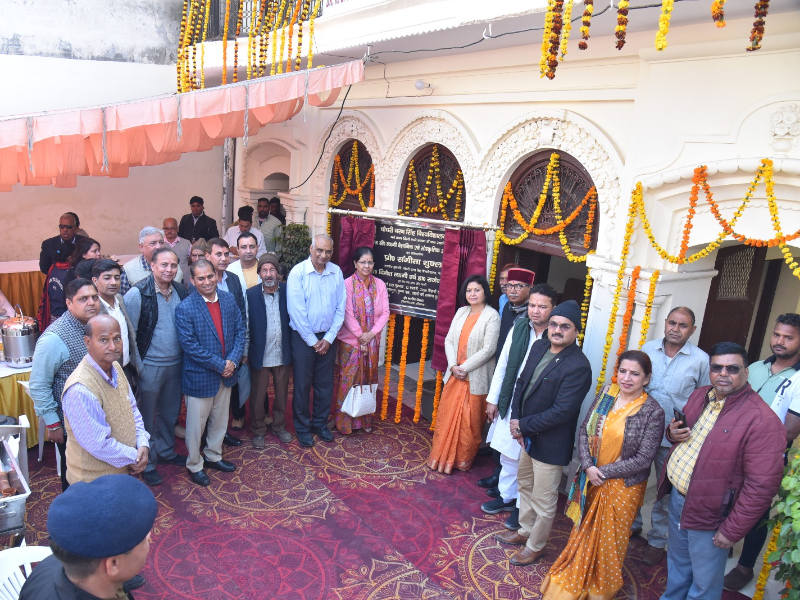 The ancestral “kothi” of former NASA scientist and eminent physicist Prof. R.C. Tyagi, located in Budhana Gate in the old city area of Meerut, was donated to CCS University for the establishment of the Prof. R.C. Tyagi Scientific and Cultural Research Center / S Raju
Sometimes, history does not begin in grand halls or official ceremonies. Sometimes, it begins quietly—with a brief meeting between two women, a shared sense of purpose, and the determination to honor a dream.
That is exactly how an extraordinary and unprecedented initiative took shape in Meerut, a historic city in western Uttar Pradesh, situated nearly 60 kilometers from Delhi.
A brief meeting between Chaudhary Charan Singh University Vice-Chancellor Dr. Sangeeta Shukla and Shikha Tyagi laid the foundation of something that had never happened before in the history of CCS University—nor had such a decision ever been taken by an NRI family from Meerut.
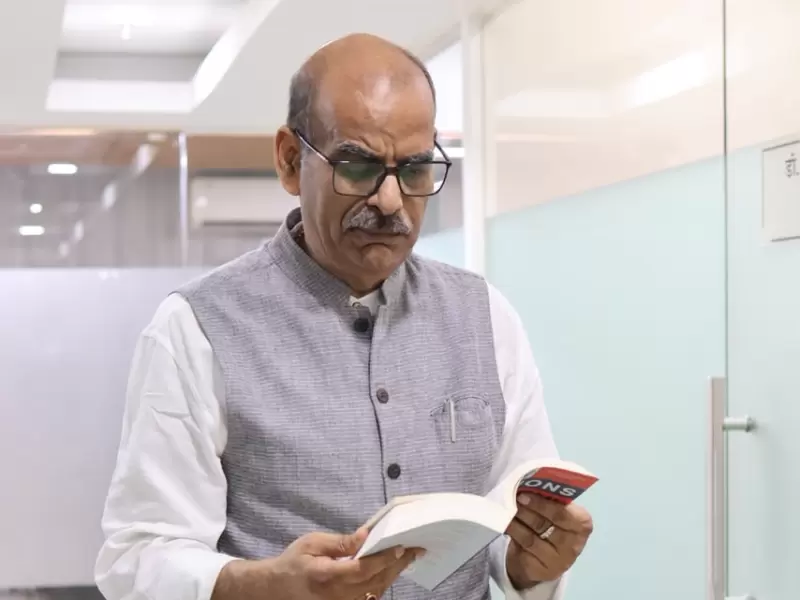
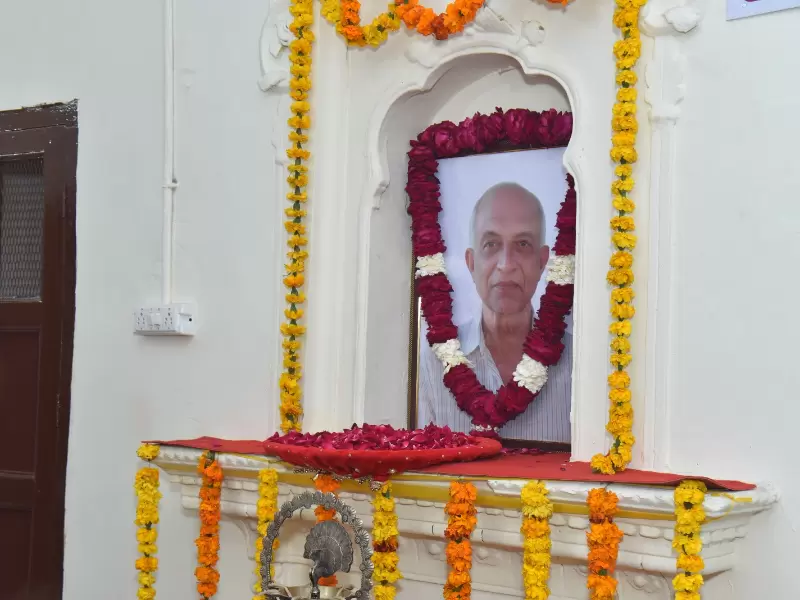 Prof. R.C. Tyagi / S. Raju
The ancestral “kothi” of former NASA scientist and eminent physicist Prof. R.C. Tyagi, located in Budhana Gate in the old city area of Meerut, was donated to CCS University for the establishment of the Prof. R.C. Tyagi Scientific and Cultural Research Center—a living institution dedicated to education, research, music, culture, and youth development.
Spread across 368 square yards and nearly a century old, the house is worth crores and has long been a familiar landmark for the Tyagi community. But for Prof. Tyagi and his family, it was never just property—it was a legacy.
And that legacy has now become a gift to society.
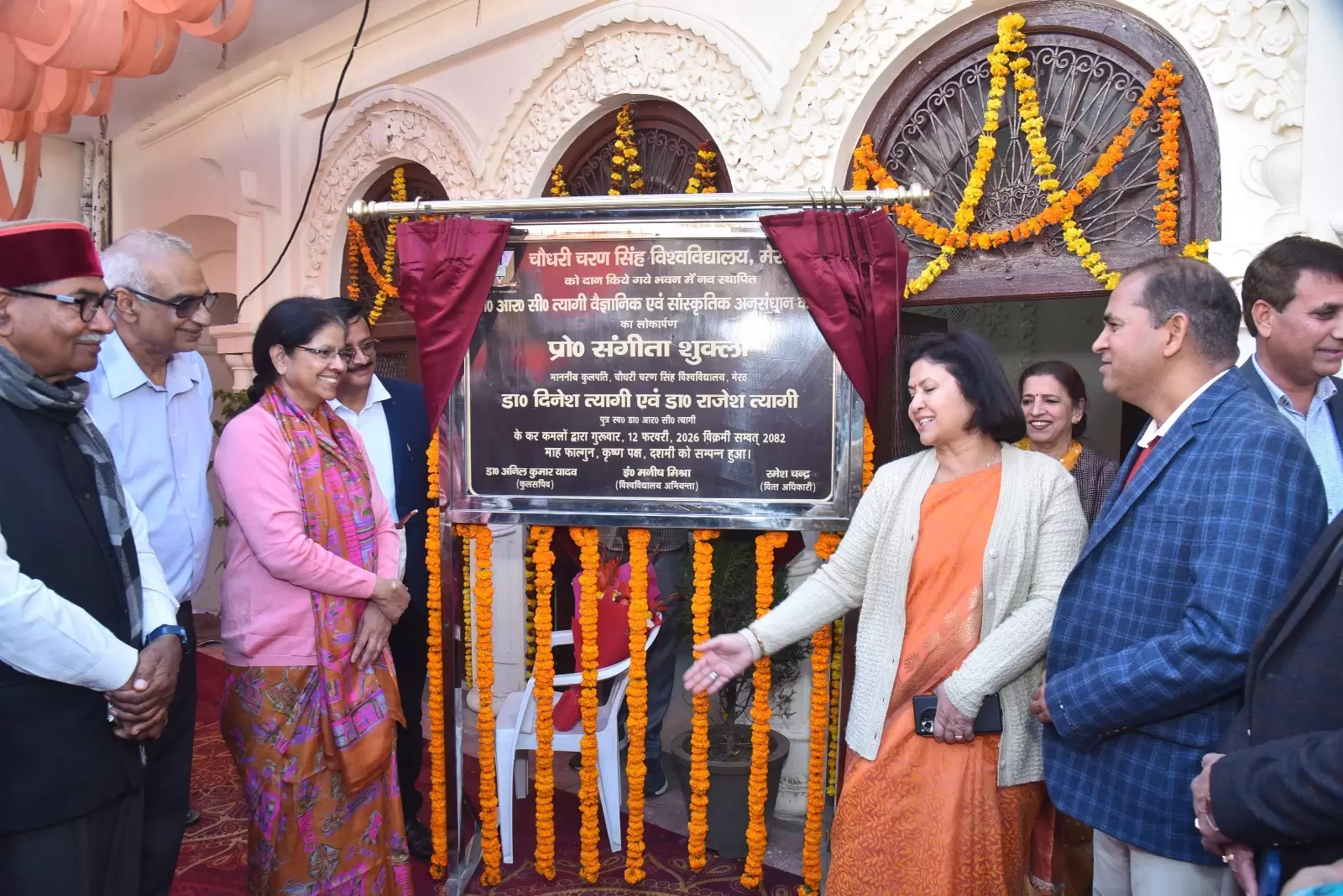
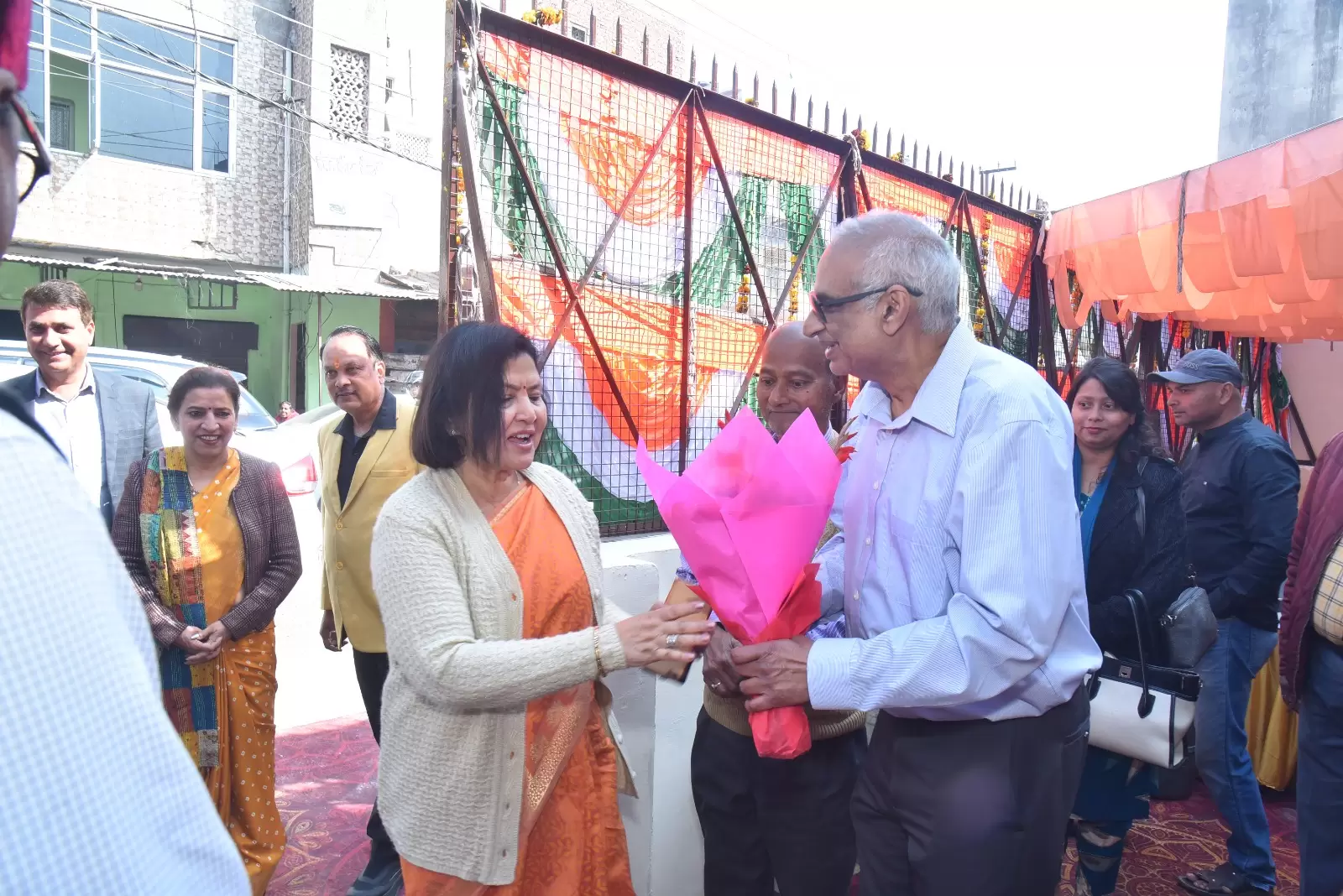
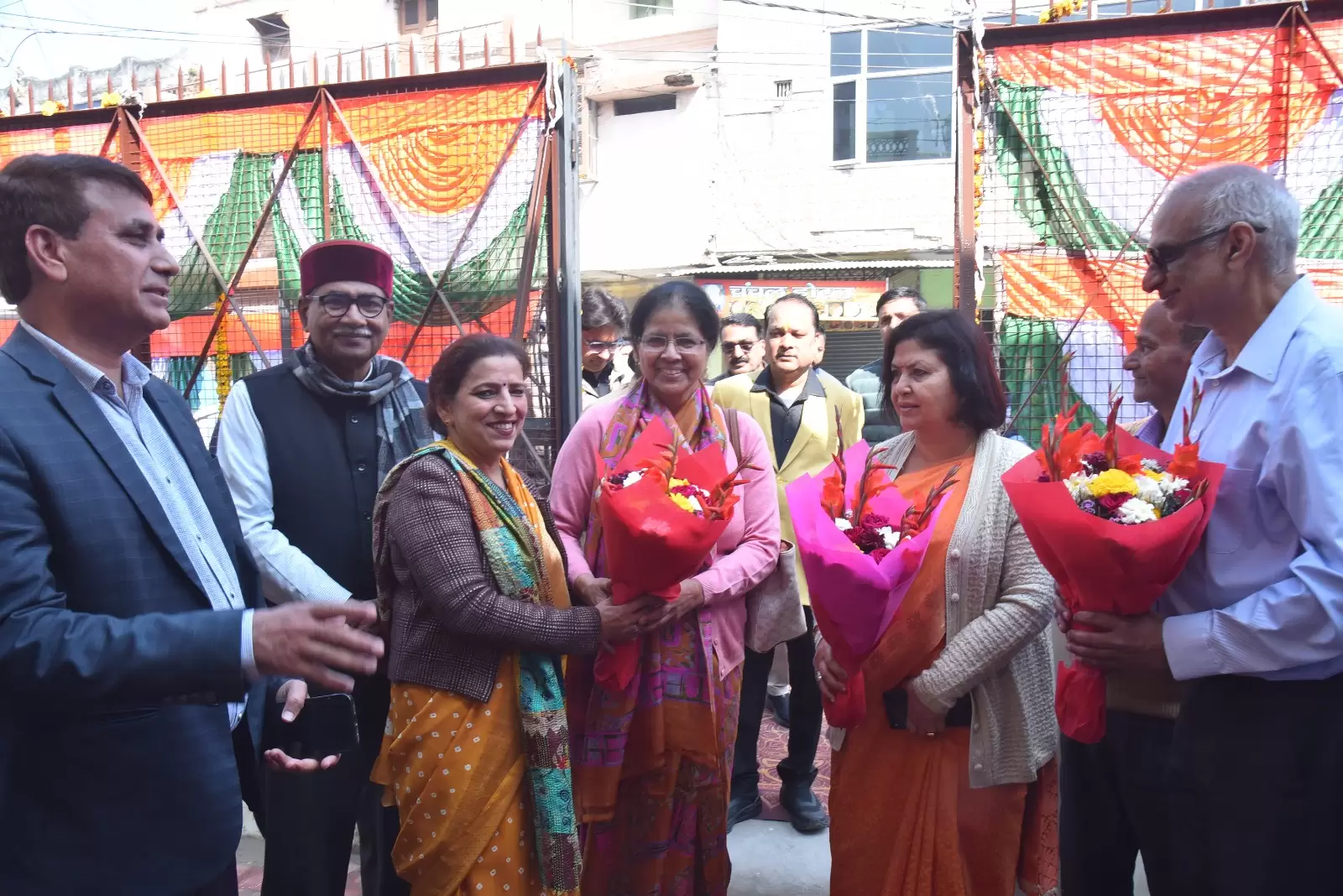
The center was formally inaugurated on Feb. 12, 2026, by CCS University Vice-Chancellor Dr. Sangeeta Shukla in the presence of Shikha Tyagi, Dr. Rajesh Tyagi, Prof. Beerpal Singh, the university’s civil engineer Manish Mishra, and several distinguished guests and university dignitaries, marking a historic moment for the university and the city of Meerut.
A scientist who returned from NASA for India
Prof. R.C. Tyagi’s life was itself extraordinary.
Originally from Meerut, he completed his B.Sc. from City College before pursuing his M.Sc. in physics in Madhya Pradesh. He later joined the National Physical Laboratory in Delhi and went to the United Kingdom in 1963 to complete his Ph.D. from Hull University.
After returning to India, he joined IIT Delhi, where he led the solid-state physics division. In 1970, he moved to NASA in the United States and earned recognition for advanced infrared missile detection technologies.
But despite international recognition, he answered a far greater call.
At the request of then-Prime Minister Indira Gandhi and on invitation from DRDO, Prof. Tyagi returned to India to serve the nation as a senior defense scientist at the Solid State Physics Laboratory. There, he successfully developed detector technology for anti-aircraft missiles.
However, he was not even allowed to properly establish the laboratory required for his project, despite government funds being allocated for it. Several senior officials became major obstacles in the execution of his scientific work. When Prof. Tyagi raised these issues before the then defense minister, he was arbitrarily transferred to the Defense Academy in Pune as a professor.
Prof. Tyagi refused to accept the transfer.
His services were terminated.
What followed changed his life forever.
When he exposed corruption at the highest levels of the institution, his project was shut down and he was pushed out of the system. But he refused to surrender.
That refusal became a battle.
For nearly 20 years, Prof. Tyagi fought a lonely legal war against corruption and institutional injustice. During this period, he had no regular income. Yet he refused to bend.
His son Dr. Rajesh Tyagi recalls emotionally:
“For 20 years during his case, my father had no income. While we—the sons—often offered to help, my father was too proud to take our help. My parents lived frugally.”
Determined to fight his own case, Prof. Tyagi even obtained a law degree from Meerut so he could argue in the Supreme Court himself.
After nearly two decades of struggle, he won.
The Supreme Court ruled in his favor.
It was not merely a legal victory—it was the triumph of integrity over corruption.
He had earlier been honored with the prestigious S.S. Bhatnagar Award soon after returning from the United States, around 1976, in recognition of his outstanding scientific work—one of India’s highest honors in science.
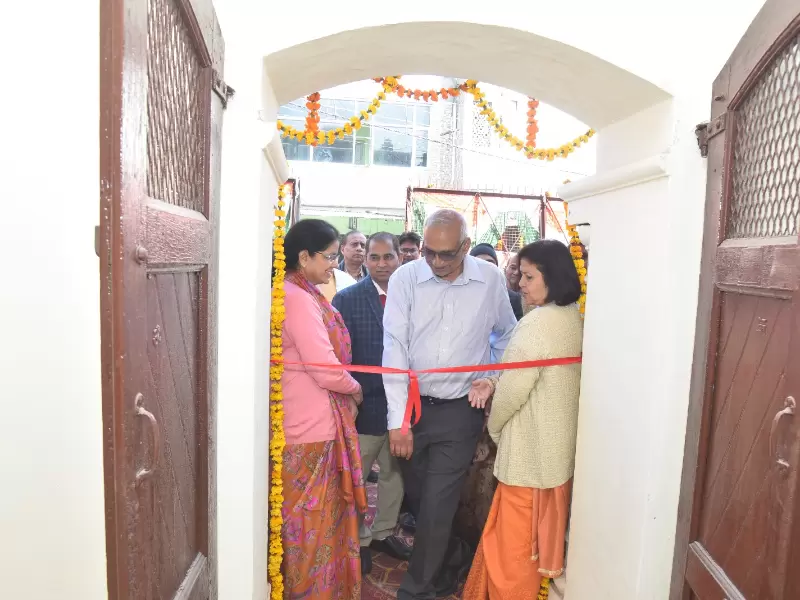 The center was formally inaugurated on Feb. 12, 2026, by CCS University Vice-Chancellor Dr. Sangeeta Shukla in the presence of Shikha Tyagi, Dr. Rajesh Tyagi, Prof. Beerpal Singh, the university’s civil engineer Manish Mishra / S. Raju
Science, music, and a mind beyond boundaries
Prof. Tyagi was not confined to laboratories.
He also conducted remarkable work in music, discovering the mathematical foundations of musical scales and designing a “Swar Mandal” based on his findings. His work was praised internationally, including recognition in the 2013 publication 'Histories and Narratives of Music Analysis' by Cambridge Scholars Publishing.
This rare blend of science and music is precisely why the new center will reflect both.
Vice-Chancellor Dr. Sangeeta Shukla says:
“Prof. R.C. Tyagi had deep interest not only in science but also in music. We want this center to begin with activities related to music and arts, and later expand it with scientific activities, a strong library, and academic engagement. It will be a great help for youngsters right at their doorstep in the old city area.”
She adds:
“This is not just a donation of a building—it is the donation of a vision. Such examples inspire universities and society alike.”
The silent strength behind the family
Behind Prof. Tyagi stood remarkable women—his wife Pushpa Tyagi, his mother, and his bua (paternal aunt)—three pillars of strength who gave him emotional courage during the most difficult years of his life.
His mother and bua were embodiments of affection, sacrifice, and silent resilience. Prof. Tyagi drew tremendous strength from them, while his wife Pushpa took exceptional care of both elderly women with deep devotion and love.
Pushpa Tyagi herself was a remarkable woman.
A homemaker by choice and spirit, she raised the family during difficult years, especially when Prof. Tyagi was in the U.K. completing his Ph.D.
“She was incredibly loving,” recalls the family.
“She took care of the two children on her own when they were very young. She was generous by nature and always ready to help others.”
Deeply religious and quietly charitable, she was especially devoted to the anath ashram in Meerut and believed strongly in giving back.
The couple often discussed using their ancestral home for something meaningful after their lifetime—a girls’ hostel, perhaps, or a school.
Selling it was never an option.
The role of Shikha Tyagi: Turning a wish into reality
When both sons had settled in the United States, it was cousin Shikha Tyagi who became the emotional bridge between the family and Meerut.
She was more than family—she was, in many ways, the daughter Prof. Tyagi never had, and someone he trusted deeply. She became his local guardian when both sons were living in the United States.
“My father Balraj ‘Hairat’ was one of Prof. Tyagi’s closest friends,” says Shikha.
“He stood by him during his legal fight and helped draft documents during his crusade against corruption. I was deeply connected to the family because of Dr. Tyagi’s close association with my father, who unfortunately passed away early—but not before seeing the Supreme Court ruling come in Mausaji’s favor.”
Many private universities approached the family with proposals for the property.
But Shikha kept searching for the right institution.
“In the end, donating it to CCS University just felt right,” she says.
“Dr. Tyagi had worked with the university, and we knew CCSU would keep the house alive and use it for academic purposes. Dr. Sangeeta Shukla received the idea warmly, and with strong support from Prof. Beerpal Singh and others, everything moved forward quickly.”
It was this meeting between Dr. Shukla and Shikha that transformed a family wish into institutional history.
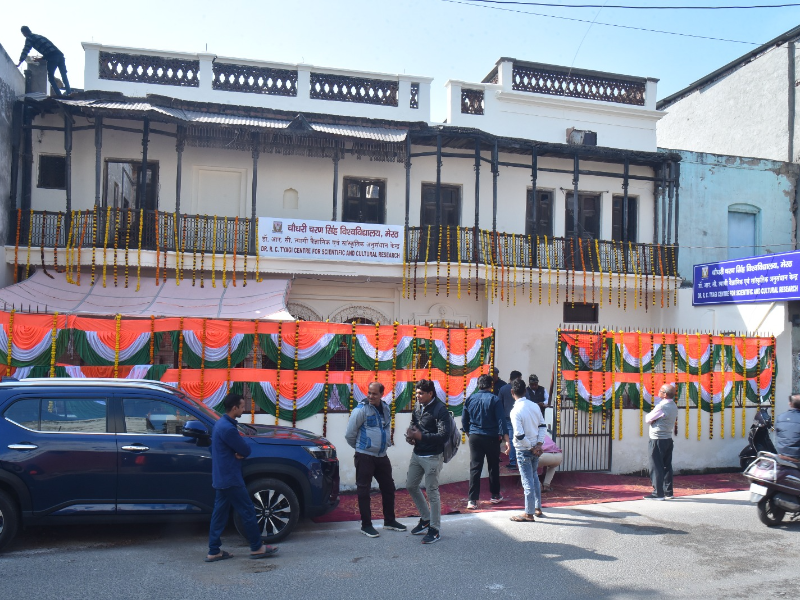 The ancestral “kothi” of former NASA scientist and eminent physicist Prof. R.C. Tyagi / S. Raju
Sons who took their father’s legacy global
Prof. Tyagi’s sons, Dr. Dinesh Tyagi and Dr. Rajesh Tyagi, both built distinguished scientific careers in the United States.
Dr. Dinesh Tyagi, an IIT Delhi graduate, went on to Virginia Tech and later became a globally recognized scientist with more than 300 patents worldwide. He worked with Kodak, IBM Printing Division, and Lexmark International, and received prestigious honors including the Chester F. Carlson Award and the Robert F. Reed Technology Medal.
Dr. Rajesh Tyagi completed electrical engineering from IIT Delhi, pursued an MBA from IIM Calcutta, and later earned a Ph.D. in management science in the U.S. He spent 25 years with GE Corporate Research specializing in renewable energy and power grid optimization.
Today, Rajesh continues to stay connected to Meerut and CCS University.
“Our connection with the university hasn’t ended there,” he says.
He is now working with CCSU to help introduce AI-related courses into the curriculum. A new online course on data science and machine learning using Python is being launched jointly with the university’s statistics department.
This is not merely inheritance.
It is continuation.
Prof. Beerpal Singh: A center that will inspire generations
University Prof. Beerpal Singh, who worked closely with Prof. Tyagi and co-authored research papers with him, believes the center will become a landmark of inspiration.
“Prof. Tyagi brought tremendous academic energy to the Department of Physics after joining CCS University in 1995. His presence gave new momentum to research and scholarship. This center will preserve not only his memory but also his spirit of inquiry and courage.”
He adds:
“This is a place where science, values, and culture will meet. Students must know that greatness is built on honesty and perseverance.”
More than a building
This old Budhana Gate house is no longer just a family residence.
It is now a symbol.
A symbol of integrity.
A symbol of sacrifice.
A symbol of how one scientist fought corruption for 20 years and won.
A symbol of how two women—one a vice chancellor, the other a family guardian—ensured that his final wish did not fade with time.
And above all, a symbol of how education, when rooted in values, can transform even a century-old home into a living institution for generations to come.
In Meerut, the native town of Prof. Tyagi, history has found a new address.
Discover more at New India Abroad.
Leave A Comment
Related

ADVERTISEMENT

ADVERTISEMENT
E Paper
Video

Comments
Start the conversation
Become a member of New India Abroad to start commenting.
Sign Up Now
Already have an account? Login