ADVERTISEMENT

ADVERTISEMENT

Beyond Mere Paas Maa Hai!

Hindi cinema's mothers evolved from sacrificial ideals to independent, realistic women, reflecting India's changing social and cultural values.

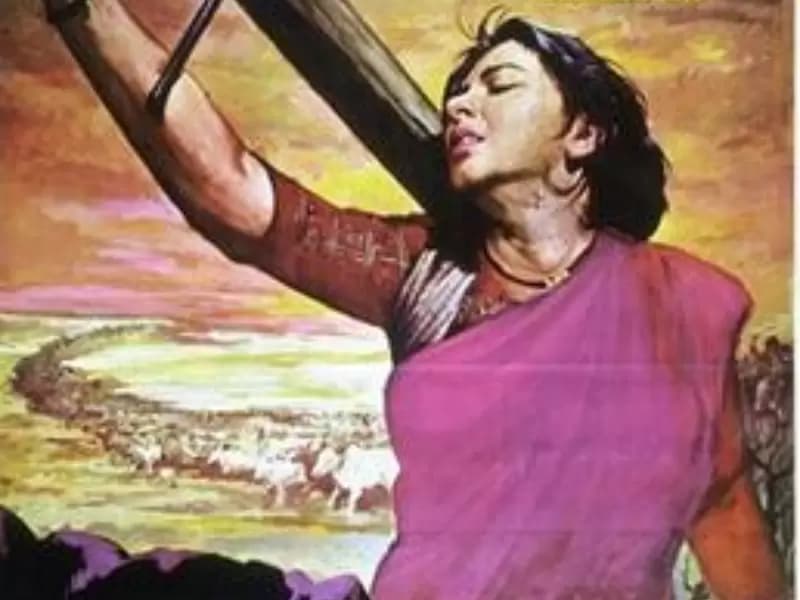
 Mother India poster Mother India poster / Wikipedia

Mothers in Hindi cinema have never been incidental-they have been formative, shaping not just the emotional core of films but also influencing how generations perceive motherhood itself. It's hardly surprising then that each era has had its defining "maa," one who didn't just belong to a film but came to represent the cultural mood of her time. The evolution so layered that with each phase added a new dimension to an already powerful archetype.

To begin at the beginning, the early decades of Hindi cinema gave us mothers who were gentle yet dignified, their strength lying in quiet resilience. Leela Chitnis emerged as one of the first quintessential screen mothers in the 1940s and '50s, often playing the nurturing. morally upright figure opposite leading men like Dilip Kumar and Raj Kapoor. Her screen presence carried a certain grace-she was soft-spoken yet firm, affectionate yet principled, embodying the ideal Indian mother in a newly independent nation. Not far behind were Sulochana and, a little later, Nirupa Roy-who would go on to define the trope so completely that it became almost inseparable from her Identity

With Nirupa Roy, the Bollywood mother became almost mythologised in her suffering. Whether in Deewaar (1975) or a host of similar films, she was the impoverished, wronged, yet morally unshakeable figure whose children were often separated by fate, crime, or circumstance. The recurring trope of losing children at melas became shorthand for a larger emotional rupture-families torn apart in a society still negotiating post-independence instability. Roy's characters rarely questioned their fate; instead, they endured it, placing faith above all else. Her motherhood was sacrificial to the point of sanctity-she forgave errant sons, prayed for their redemption, and ultimately became the moral barometer against which all actions were judged.

Then came a figure who, while not part of this assembly line, changed the emotional vocabulary of motherhood altogether-Nargis in Mother India (1957). As Radha, she wasn't just a mother but an institution: widowed, self-reliant, and fiercely principled. Her journey from a young bride to a battle-hardened matriarch mirrored the struggles of a nation finding its footing. What made Radha revolutionary was not just her resilience, but her moral absolutism. In the film's climax, when she shoots her own son for straying into criminality, it becomes a moment that transcends cinema-an assertion that righteousness must prevail over personal attachment. Yet, despite its influence, Mother India remained an exception to the the norm. Bollywood, for the most part, retreated into safer depictions rather than embracing such complexity.

By the 1980s and especially the 1990s, the mother began to soften. The suffering didn't disappear, but it was balanced with warmth, humour, and a newfound visibility within the narrative. Actresses like Farida Jalal and Reema Lagoo became the faces of this transition. In films like Maine Pyar Kiya (1989) and Hum Aapke Hain Koun..! (1994), they embodied the idealised Indian mother-loving, approachable, and emotionally available. Farida Jalal often brought a lived-in warmth to her roles, making the mother feel like someone you recognised from your own home, while Reema Lagoo perfected the balance between authority and affection.

These mothers laughed, participated in family songs, nudged romances along, and occasionally teased their children. They could share a joke with their in-laws, engage in light-hearted banter, and still anchor the family's moral centre. The mother was no longer just enduring-she was enjoying. And yet, her identity remained rooted within the family; she existed for it, even if she now smiled more within it.

The tonal shift became sharper in the 2000s, when personality began to define the Bollywood mother as much as virtue. Kirron Kher marked this change with unmistakable flair. In Dostana (2008), she transformed what could have been a stereotypical role into a memorable, layered performance-dramatic, comedic, and deeply human. Her rendition of "Maa Da Ladla Bigad Gaya" became a cultural moment, but beyond the humour lay a character who reacted, questioned, and evolved. She could be loud, overbearing, and fiercely protective, yet never caricatured. This was a mother who occupied space unapologetically, refusing to fade into the background.

And then came what can only be described as a cultural pivot. With Ratna Pathak Shah, the Bollywood mother entered an entirely new socio-cultural space. In Jaane Tu... Ya Jaane Na (2008), she played a single, articulate, and refreshingly unconventional parent who spoke to her son as an equal, often in English, discussing relationships and identity with disarming ease. By the time she appeared in Kapoor & Sons (2016), this persona had deepened-she was part of a dysfunctional family dynamic, navigating generational conflict and personal disappointment with sharp wit and emotional clarity, Ratna Pathak Shah's characters weren't interested in being ideal; they were interested in being real. They represented an India where mothers were educated, independent, and unafraid to challenge their children's worldview.

The Outlier Mommies

Around and alongside these transitions were several actors who expanded the idea of motherhood in quieter but equally significant ways. Jaya Bachchan, particularly in Kabhi Khushi Kabhie Gham (2001), brought a sense of emotional intuition that transcended dialogue-her character seemed to feel her son's presence across continents, suggesting a bond that was both spiritual and deeply personal. Rakhee in Karan Arjun (1995) sustained the faith-driven archetype but infused it with emotional intensity, making her belief in her sons' return the film's beating heart.

At the same time, actors like Dimple Kapadia in Dil Chahta Hai (2001) complicated maternal identity by portraying a woman with her own romantic life-flawed, lonely, and seeking connection. Shabana Azmi in Godmother (1999) went a step further, presenting motherhood within the framework of power and politics, where nurturing coexisted with authority and ambition. These performances quietly but firmly pushed the boundaries of what a "mother" could be on screen.

The more recent decade has perhaps been the most liberating for the Bollywood mother. Vidya Balan in Paa (2009), despite the unconventional casting of Amitabh Bachchan as her son, portrayed a single working mother with remarkable dignity and emotional balance. She was neither glorified nor victimised-just quietly strong. Neena Gupta in Badhaai Ho (2018) delivered one of the most refreshing portrayals of motherhood in recent years, navigating an unplanned late-life pregnancy with vulnerability, humour, and defiance. Her character challenged not just cinematic tropes but societal discomfort around age, desire, and womanhood. Amrita Subhash in Gully Boy (2019) portrays a volatile, emotionally charged mother shaped by circumstance, while Sakshi Tanwar in Mai: A Mother's Rage transforms grief into action, embodying a mother driven not by passive suffering but by agency and vengeance.

What emerges from this journey is a gradual but definitive shift- if earlier cinema gave us "Mere paas maa hai" as the ultimate emotional trump card, today's films offer something far more nuanced. The mother is no longer just a symbol of sacrifice or morality. She is flawed, funny, conflicted, and complete. And perhaps, for the first time, she has a life of her own.

Discover more at New India Abroad.

Comments

Leave A Comment

Required fields are marked (*).

Related