ADVERTISEMENT
ADVERTISEMENT



U.S. Congress sees India as Key AI, tech and defence partner
At a CSIS discussion, Representative Rich McCormick warned against restricting India’s access to advanced technologies.
-
 IANS
IANS - Tue, 13, Jan 2026
- 04:11 EST
- 71
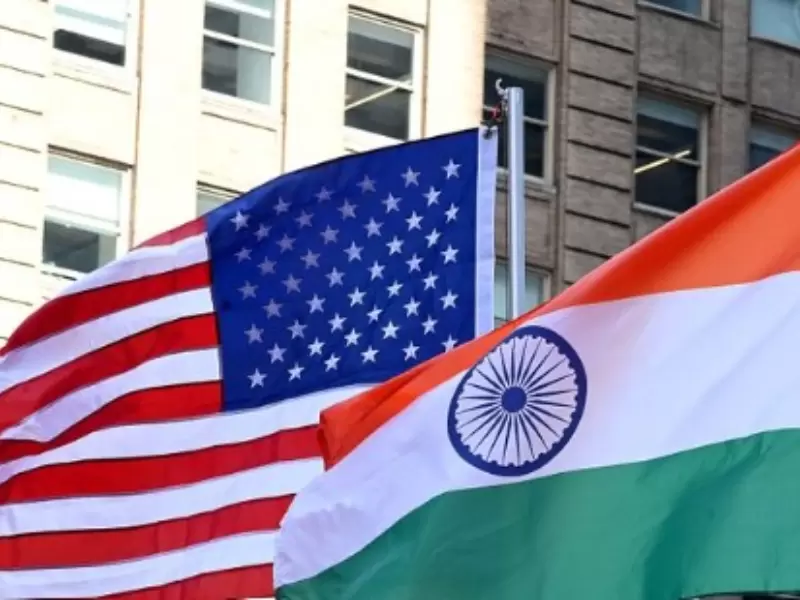 U.S. Congress sees India as Key AI, tech and defence partner / Photo: X/@RepMcCormick
U.S. lawmakers on Jan. 12 said India is emerging not merely as a defence buyer or technology market, but as a critical partner in artificial intelligence, advanced manufacturing, and Indo-Pacific security.
At a CSIS discussion, Representative Rich McCormick warned against restricting India’s access to advanced technologies. “If we start limiting access to our products, that’s going to be bad for us as a country,” he said.
ALSO READ: Upcoming ‘India AI Impact Summit 2026’ a defining moment: Experts
McCormick argued that keeping India aligned with U.S. technology standards is strategically vital. “If we limit our good chips to the rest of the world, they’ll get them from somewhere else… then they become the standard,” he said.
Indian American Representative Ami Bera described AI as “a transformational technology” that demands close cooperation. “The United States and India should work incredibly closely together to both advance AI, solve challenges that are going to emerge,” he said.
Bera said such collaboration should extend to health care and global development. “It’s also an opportunity for us to rethink what visas look like,” he said, suggesting new mobility corridors for high-skilled workers.
Both lawmakers linked technology cooperation to defence ties. Bera said defence-to-defence relations are on “a good trajectory,” citing co-production and joint exercises. “We want to continue doing more joint exercises, joint training, joint development,” he said.
McCormick noted India’s push for defence self-reliance. “Prime Minister Modi’s ultimate goal… is to be independent as a defence contractor,” he said, pointing to Indian requirements for majority domestic ownership.
He argued that U.S. defence systems must modernize. “Our technologies have not kept up in the defence industry,” McCormick said, criticizing reliance on “antiquated systems.”
Both lawmakers strongly endorsed the QUAD grouping. “The reason I know the Quad’s so important is because Beijing hates it,” Bera said.
They also highlighted people-to-people ties as a strategic asset. McCormick noted the scale of Indian talent in the U.S. “We have a quarter million Indian students here right now,” he said, warning that sending them back would strengthen competitors.
Bera said talent flows are already changing. “They see how fast the Indian domestic market is growing… they can move back and forth,” he said.
The discussion also touched on energy and data infrastructure. McCormick said data centers and AI require massive power. “There’s no way you’re going to produce that kind of power from anything other than nuclear,” he said.
Bera added that India faces water and energy constraints. “As Prime Minister Modi wanted to build out data centers, they don’t have enough energy, and they don’t have enough water,” he said, pointing to opportunities for collaboration on desalination and civil nuclear technology.
Both lawmakers argued that cooperation with India strengthens U.S. global competitiveness. “This isn’t a one-way street. This is a two-way street,” Bera said.
Discover more at New India Abroad.
Leave A Comment
Related









ADVERTISEMENT

ADVERTISEMENT
E Paper
Video

Comments
Start the conversation
Become a member of New India Abroad to start commenting.
Sign Up Now
Already have an account? Login