ADVERTISEMENT
ADVERTISEMENT



Middle East conflict, security of stranded Indians reviewed in CCS meet
Convened under the leadership of Prime Minister Narendra Modi on Mar. 1, the CCS reviewed the evolving situation in West Asia.
-
 IANS
IANS - Mon, 02, Mar 2026
- 05:32 EST
- 79
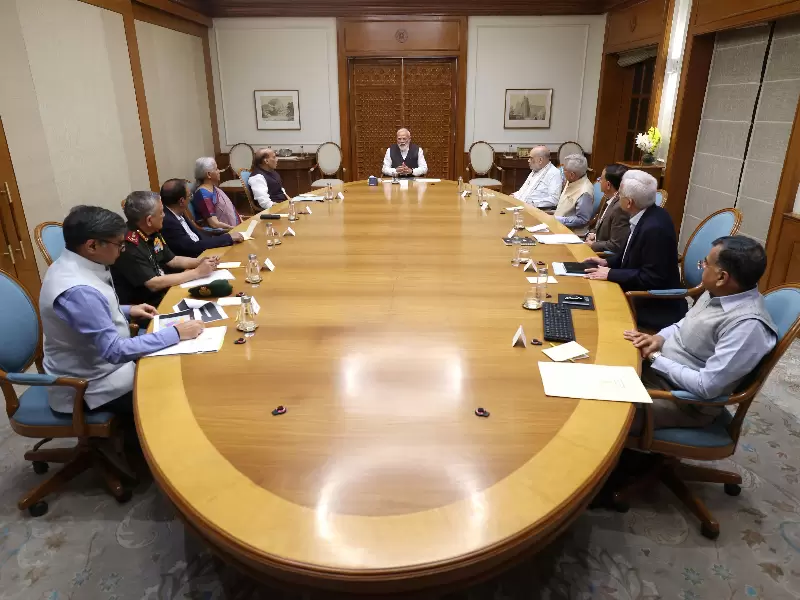 New Delhi: Prime Minister Narendra Modi chairs a meeting of the Cabinet Committee on Security (CCS) in New Delhi, Mar. 1, 2026. / IANS/PMO
The Cabinet Committee on Security (CCS) was briefed on the air strikes in Iran on Feb. 28 and the subsequent escalation in the Middle East, as well as the security of the Indian citizens in the region.
Convened under the leadership of Prime Minister Narendra Modi on Mar. 1, the CCS reviewed the evolving situation in West Asia.
ALSO READ: PM Modi, Benjamin Netanyahu discuss West Asia situation amid rising regional tensions
The meeting of the Cabinet committee, the apex decision-making body on security and strategic matters of India, came against the backdrop of a rapidly deteriorating geopolitical situation in the Middle East following coordinated U.S.-Israeli airstrikes on Iran, which have intensified regional conflict and raised global security concerns.
Defence Minister Rajnath Singh, Home Minister Amit Shah, External Affairs Minister S. Jaishankar, Finance Minister Nirmala Sitharaman, NSA Ajit Doval and Foreign Secretary Vikram Misri were present in the meeting.
According to the official statement, the Committee was briefed on the air strikes in Iran on Feb. 28 and the subsequent escalation, including attacks in several Gulf countries.
"It expressed serious concern over the safety and security of the large Indian expatriate community in the region," the statement added.
The CCS also assessed the challenges faced by Indian travellers transiting the region and students taking scheduled examinations, along with the broader implications for regional security, economic, and commercial activities.
"The CCS directed all concerned departments to take necessary and feasible measures to assist Indian nationals affected by the developments. It underscored the importance of an early cessation of hostilities and a return to dialogue and diplomacy," the official statement added.
India has maintained a balanced stance in the Middle East crisis, advocating de-escalation while protecting its citizens and economic ties.
Discover more at New India Abroad.
Leave A Comment
Related








ADVERTISEMENT

ADVERTISEMENT
E Paper
Video

Comments
Start the conversation
Become a member of New India Abroad to start commenting.
Sign Up Now
Already have an account? Login