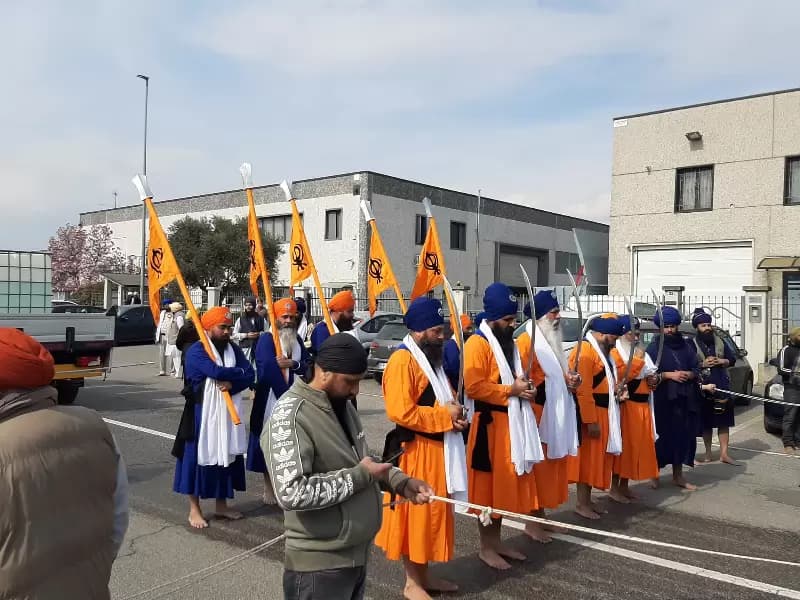
Celebrations in Italy / Prithipal Singh
Fervour and gaiety marked the Vaisakhi celebrations the world over. While members of the Sikh community took out “Nagar kirtan” processions, members of other communities, including Tamils, Malayalees, Bengalis, Biharis and Haryanvis, also celebrated the start of a new year or a new month, traditionally identified as a change of season, and to mark the start of harvesting of crops.
In Toronto, the Consulate-General of India in association with Virasat-e-Khalsa, organised a programme of music and festivities to bring together leaders of the Indian diaspora community from various walks of life, including business, trade, industry, banking, politics, academics, health care and other areas.
Indian High Commissioner to Canada, Dinesh Patnaik, while addressing the august gathering, highlighted the role of the Indian diaspora as the living thread that weaves the two nations together.
Mahavir Singhvi, the new Consul General, underscored Vaisakhi’s resonance across the world- and of the Sikh heritage whose legacy only grows with time.
Several members of the Ontario Provincial assembly, including SFlecce, Nina Tangri, Scott A Aitchison, Deepak Anand, Amarjot Sandhu, Hardeep Grewal and Deepika Damerla, besides Councillor Monica Singh Soares, joined the celebrations that featured Bhangra and Gidha performances, soulful live music, and deeply moving renditions of Dhadhi vaaran- honouring the timeless Sikh values of courage, faith and community.
Girish Juneja, who conducted the proceedings, reflected the immense contributions the Indian community has made while in Canada. The Sikh community is planning to take out Sikh Day Parades from various Gurdwaras later this month.
In New Zealand, the Sukh community took out an impressive Nagar kirtan procession in Tauranga, where Panj Piaras walked in front of a tastefully decorated vehicle carrying the sacred Sri Gru Granth Sahib. While gatka players gave an excellent display of this martial art, participants, including women, kept reciting holy scriptures amidst chants of “Satnam Waheguru”. Throughout the route of the processions, special community kitchens, serving food, sweets, fruit and tea were organised.
In Italy, the celebrations witnessed many Italians joining their Indian immigrants in festivities. The main function was held at Gurdwara NoVo Lara, the oldest Sikh temple in the country. To celebrate the Khalsa Srijana Divas or the birth of Khalsa and mark the beginning of the month of Vaisakh, “Sri Akhand Path Sahib” – continuous recitation of hymns from Sri Guru Granth Sahib was started on April 9. After the recitation on April 11, a special congregation was held where, besides kirtan, a jatha of Dhadhi Singhs led by Gurjit Singh Jangla, enthralled the audience with its soulful singing of historic episodes of Sikh history and culture.
In the afternoon after the bhog ceremony, Panj Piaras led a colourful procession that moved through various parts of NoVo Lora city. A special decorated tractor-trailer carrying the holy Sri Guru Granth Sahib on a flower-decked palanquin was the main attraction of the procession that was greeted at various places by local Italian people.
Some devout walking ahead of the procession were sweeping the roads and sprinkling water while reciting “Satnam Waheguru” as the procession returned to the gurdwara after more than two hours. En route, many booths and food stalls served fresh and hot food, snacks, tea, drinks and fruit to the participants. Throughout the procession, there was a breathtaking display of gatka by a team of young players.
The entire city wore a festive look. According to Prithipal Singh of the World Sikh Soldiers Memorial Committee, an estimated 15-20,000 people joined the Vaisakhi celebrations.
Committees associated with Sikh organisations and gurdwaras in Parma, Suzzaru, Coroje, Modana, Sanjawani and other nearby areas of northern Italy participated in the celebrations enthusiastically. The participants included key office-bearers like Presidents and Secretaries of these committees. Senior functionaries of the district administration and police also remained present throughout and were presented with mementos by the organizing committee.
Vaisakh is observed as Vaisakhi. It was on this day that five devotees volunteered to sacrifice their lives in response to a call made by the 10th Sikh Guru, Guru Gobind Singh. The five – Bhai Daya Singh, Bhai Dharam Singh, Bhai Muhkam Singh, Bhai Himmat Singh and Bhai Sahib Singh – later had the distinction of baptizing Guru Gobind Singh after their own captivation at a special congregation held at Takht Sri Kesgarh Sahib.
While people in Tamil Nadu celebrate Vaisakhi as Puthandu, the festivities are known as Vishu in Kerala. In Bengal, this seasonal festival is celebrated as Naba Barsha (New Year). In neighbouring Assam, it is called Rongali Bihu.
In Bihar, celebrations are again tied to the start of a new solar year. It is called Vaishakha in Bihar in honour of the Sun God. While in Haryana, like Punjab, Vaisakhi continues to be a major religious and socio-economic festival. However, in the hill state of Himachal Pradesh, people make a pilgrimage to Jawalaji temple and take a holy dip in the hot springs there.
Traditionally, religious celebrations include taking out a Nagar Kirtan procession, which is usually held a day or two before the actual Vaisakhi day, and holding a special religious congregation at gurdwaras, where community kitchens – langar – jalebis are a special attraction.
Discover more at New India Abroad.
Fervour and gaiety marked the Vaisakhi celebrations the world over. While members of the Sikh community took out “Nagar kirtan” processions, members of other communities, including Tamils, Malayalees, Bengalis, Biharis and Haryanvis, also celebrated the start of a new year or a new month, traditionally identified as a change of season, and to mark the start of harvesting of crops.
In Toronto, the Consulate-General of India in association with Virasat-e-Khalsa, organised a programme of music and festivities to bring together leaders of the Indian diaspora community from various walks of life, including business, trade, industry, banking, politics, academics, health care and other areas.
Indian High Commissioner to Canada, Dinesh Patnaik, while addressing the august gathering, highlighted the role of the Indian diaspora as the living thread that weaves the two nations together.
Mahavir Singhvi, the new Consul General, underscored Vaisakhi’s resonance across the world- and of the Sikh heritage whose legacy only grows with time.
Several members of the Ontario Provincial assembly, including SFlecce, Nina Tangri, Scott A Aitchison, Deepak Anand, Amarjot Sandhu, Hardeep Grewal and Deepika Damerla, besides Councillor Monica Singh Soares, joined the celebrations that featured Bhangra and Gidha performances, soulful live music, and deeply moving renditions of Dhadhi vaaran- honouring the timeless Sikh values of courage, faith and community.
Girish Juneja, who conducted the proceedings, reflected the immense contributions the Indian community has made while in Canada. The Sikh community is planning to take out Sikh Day Parades from various Gurdwaras later this month.
In New Zealand, the Sukh community took out an impressive Nagar kirtan procession in Tauranga, where Panj Piaras walked in front of a tastefully decorated vehicle carrying the sacred Sri Gru Granth Sahib. While gatka players gave an excellent display of this martial art, participants, including women, kept reciting holy scriptures amidst chants of “Satnam Waheguru”. Throughout the route of the processions, special community kitchens, serving food, sweets, fruit and tea were organised.
In Italy, the celebrations witnessed many Italians joining their Indian immigrants in festivities. The main function was held at Gurdwara NoVo Lara, the oldest Sikh temple in the country. To celebrate the Khalsa Srijana Divas or the birth of Khalsa and mark the beginning of the month of Vaisakh, “Sri Akhand Path Sahib” – continuous recitation of hymns from Sri Guru Granth Sahib was started on April 9. After the recitation on April 11, a special congregation was held where, besides kirtan, a jatha of Dhadhi Singhs led by Gurjit Singh Jangla, enthralled the audience with its soulful singing of historic episodes of Sikh history and culture.
In the afternoon after the bhog ceremony, Panj Piaras led a colourful procession that moved through various parts of NoVo Lora city. A special decorated tractor-trailer carrying the holy Sri Guru Granth Sahib on a flower-decked palanquin was the main attraction of the procession that was greeted at various places by local Italian people.
Some devout walking ahead of the procession were sweeping the roads and sprinkling water while reciting “Satnam Waheguru” as the procession returned to the gurdwara after more than two hours. En route, many booths and food stalls served fresh and hot food, snacks, tea, drinks and fruit to the participants. Throughout the procession, there was a breathtaking display of gatka by a team of young players.
The entire city wore a festive look. According to Prithipal Singh of the World Sikh Soldiers Memorial Committee, an estimated 15-20,000 people joined the Vaisakhi celebrations.
Committees associated with Sikh organisations and gurdwaras in Parma, Suzzaru, Coroje, Modana, Sanjawani and other nearby areas of northern Italy participated in the celebrations enthusiastically. The participants included key office-bearers like Presidents and Secretaries of these committees. Senior functionaries of the district administration and police also remained present throughout and were presented with mementos by the organizing committee.
Vaisakh is observed as Vaisakhi. It was on this day that five devotees volunteered to sacrifice their lives in response to a call made by the 10th Sikh Guru, Guru Gobind Singh. The five – Bhai Daya Singh, Bhai Dharam Singh, Bhai Muhkam Singh, Bhai Himmat Singh and Bhai Sahib Singh – later had the distinction of baptizing Guru Gobind Singh after their own captivation at a special congregation held at Takht Sri Kesgarh Sahib.
While people in Tamil Nadu celebrate Vaisakhi as Puthandu, the festivities are known as Vishu in Kerala. In Bengal, this seasonal festival is celebrated as Naba Barsha (New Year). In neighbouring Assam, it is called Rongali Bihu.
In Bihar, celebrations are again tied to the start of a new solar year. It is called Vaishakha in Bihar in honour of the Sun God. While in Haryana, like Punjab, Vaisakhi continues to be a major religious and socio-economic festival. However, in the hill state of Himachal Pradesh, people make a pilgrimage to Jawalaji temple and take a holy dip in the hot springs there.
Traditionally, religious celebrations include taking out a Nagar Kirtan procession, which is usually held a day or two before the actual Vaisakhi day, and holding a special religious congregation at gurdwaras, where community kitchens – langar – jalebis are a special attraction.
Discover more at New India Abroad.
ADVERTISEMENT
ADVERTISEMENT
Comments
Start the conversation
Become a member of New India Abroad to start commenting.
Sign Up Now
Already have an account? Login