ADVERTISEMENT

ADVERTISEMENT

India-U.S. and Indo Pacific

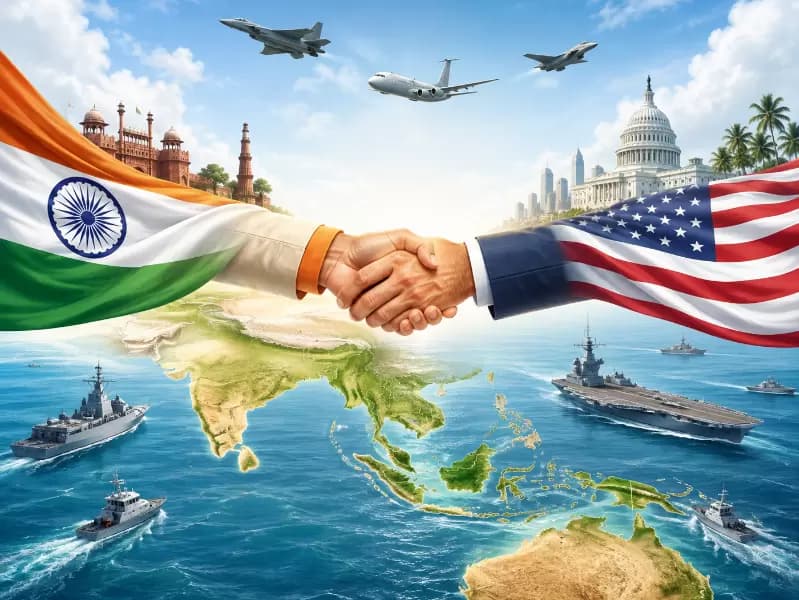
American hope has been that as India builds its military capability it will project power in the Indo Pacific and be a willing partner in countering China’s military aggression.

 Representative Image Representative Image / Generated using AI

For three and a half decades after the end of the Cold War, five successive American presidents recognized the need for a strategic partnership with India. The U.S.-led Indo Pacific strategy was also predicated upon building a lattice of interlinked partnerships and alliances across Asia.

A strategic partnership with the world’s largest democracy, India, that sits astride the Indian Ocean, was key. This was reflected in successive National Security and National Defense strategies over the last two and a half decades.

Also Read: US Vice President Vance dials PM Modi, discusses strategic partnership

American grand strategy, since the end of the Second World War, has centered around preventing the rise of a peer competitor. During the Cold War, the focus of containment was the Soviet Union; over the last decade, China has received that attention.

For many American policymakers, India has long been the ideal counterweight to China because of the size of its population, its democratic example, and its economic and military potential. That India views China as a threat has helped reinforce this view within Washington, shaping the contours of the India-U.S. strategic partnership.

The China challenge has long been the strategic imperative underlying defense cooperation. American hope has been that as India builds its military capability it will project power in the Indo Pacific and be a willing partner in countering China’s military aggression. This has aligned with an India that views itself as the net security provider and first responder in the Indian Ocean region.

As two countries in differing geographies with different histories the U.S. and India had differing views of Soviet Russia and Pakistan. Similarly, as a protectionist state, trade related tensions with India date back to the 1990s. However, these differences were rarely allowed to derail the broader strategic relationship.

The first Trump administration sought to deepen the partnership with India and supported India’s “leadership role in Indian Ocean security and throughout the broader region.” The 2022 NSS of the Biden administration continued this by stating that the two countries would work together bilaterally, regionally and multilaterally in the Indo Pacific.

Both administrations viewed India as a key security partner in the region, which directly ties into the American strategy to create a security architecture for the Indo-Pacific.

There is a broad absence of grand strategy underwriting the second Trump administration’s policies globally, however, when it comes to a non-security ally like India, the lack of strategic focus is glaring. The NSS and NDS of the administration mention India but solely in terms of improving commercial relations and the need for India to contribute to Indo Pacific security.

The energetic ambassadorship of Sergio Gor, the frequent phone calls between PM Modi and President Trump, and Secretary of State Rubio’s four-day long visit to India in May 2026 notwithstanding, the relationship lacks a strategic push. The Secretary’s public comments that India remains a valuable ally and is not being singled out are great optics but do not change the reality.

Four ministerial level Quad summits cannot compensate for the lack of a Quad Leaders level summit over two years. The change in nomenclature of the Indo Pacific Command back to Pacific Command, and the focus on homeland and hemispheric defense means the Indo Pacific is no longer the premier center of gravity.  

This administration’s vision of partnership appears to focus upon burden sharing and burden shifting instead of building capacities and capabilities. This combined with what appears to be an old European balance of power approach to China is changing the strategic foundations of the Washington-Delhi partnership.

This geopolitical and geoeconomic churn of the last year and a half has in turn led India to double down on multi-alignment and strategic autonomy. In the month of May, India hosted the Quad Foreign Ministers meeting just a few weeks after hosting the foreign ministers of the BRICS plus grouping.

At the end of the day, the relationship continues to move forward at the operational level, with commercial, defense, and diplomatic cooperation. However, it lacks the strategic underpinning that is critical to taking it forward.

The partnership with the United States remains the most important relationship for India. However, at a time when American policy appears isolationist, mercantilist and mercurial, India is balancing and hedging to ensure it secures its interests, both regional and global. 

(The views and opinions expressed in this article are those of the author and do not necessarily reflect the official policy or position of New India Abroad.)

Discover more at New India Abroad.


Comments

Leave A Comment

Required fields are marked (*).

Related

Talk to us?