ADVERTISEMENT
ADVERTISEMENT



Marco Rubio: Why land in Kolkata and visit the Missionaries of Charity?
Rubio’s visit comes amid renewed debate over India’s FCRA governing foreign-funded NGOs, and the USCIRF’s criticism of India’s handling of religious freedom.
-
 Vijendra Agarwal
 - Sun, 24, May 2026
- 05:05 EDT
- 350
 Sergio Gor Marco Rubio in Kolkata / X
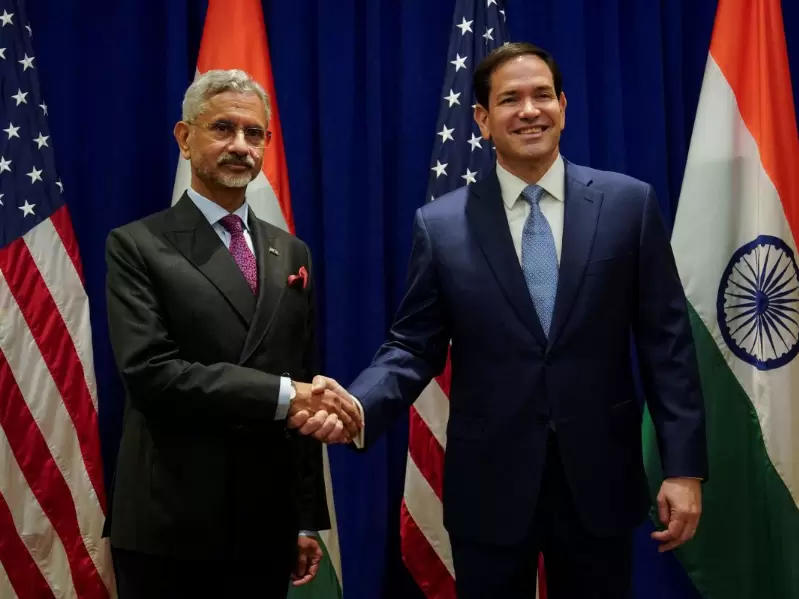
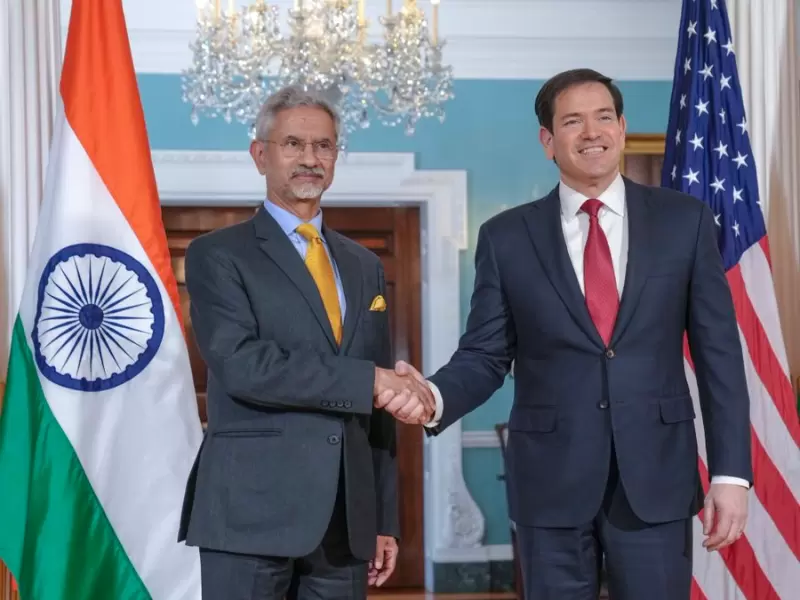
U.S. Secretary of State Marco Rubio began his India visit in Kolkata, with a highly visible stop at Mother Teresa’s Missionaries of Charity. It is unusual for a foreign dignitary not to start the visit in New Delhi, and therefore it deserves more scrutiny than the usual diplomatic language of “shared values” and “humanitarian service.”
Rubio’s visit comes just weeks after Mamata Banerjee’s defeat in West Bengal and the onset of a BJP-led government, ending a long TMC era. It also comes amid renewed debate over India’s FCRA governing foreign-funded NGOs, and the USCIRF’s criticism of India’s handling of religious freedom.
At first sight, Rubio’s visit can be described as symbolic: a charity established by Mother Teresa and compassion. But in geopolitics, symbolism is rarely innocent. Rubio opened his first official visit to India in Kolkata before proceeding to New Delhi for Quad, trade, technology, defense, and energy discussions.
That raises a legitimate question: was this only a humanitarian gesture, or does it signal something else?
The concern becomes even sharper when placed in the larger eastern-border context. After Sheikh Hasina’s ouster in Bangladesh, she reportedly alleged that U.S. pressure over Saint Martin’s Island and strategic access to the Bay of Bengal played a role in her removal. It is further alleged that the CIA played a critical role in Hasina’s ouster. The U.S. has denied such allegations, which have fueled a wider suspicion in India. Is Washington’s interest in Bangladesh, Bengal, the Bay of Bengal, and the Northeast merely humanitarian or geopolitically sensitive?
This is where the so-called “Greater Bangladesh” enters the discussion. For years, illegal migration from Bangladesh into West Bengal and the Northeast has been viewed as a demographic, national security, and political challenge. It is believed that Mamata Banerjee has been softly pedaling illegal immigration for vote-bank politics. In that context, Rubio’s arrival in Kolkata soon after her defeat and his visit to a Christian charity with a past FCRA controversy become questionable. This author, living in the United States, views it as an attempt at undue U.S. influence in a region where India’s new political reality under the BJP may be less welcoming for Greater Bangladesh.
The Missionaries of Charity, with a checkered history itself, is central to this controversy because. Its FCRA license was denied over “adverse inputs” and later restored in January 2022. USCIRF and U.S. lawmakers have repeatedly criticized India’s use of FCRA and religious-freedom laws, arguing that such tools restrict minority religious institutions and NGOs. India, however, has a sovereign right to regulate the influx of foreign money if funds are suspected to intersect with unlawful conversion, political mobilization, borderland vulnerability, or national security.
The FCRA debate is not whether charity is good but whether foreign-funded religious institutions can and should operate in strategically sensitive regions without scrutiny. Lately, Mother Teresa’s legacy has also become more contested for the role of missionary networks in poor and vulnerable regions, especially in the Northeast. The concern is not the service itself, but service intertwined with conversion, soft-power influence, and foreign pressure in border states, and thus a security threat.
Rubio’s Kolkata stop, therefore, cannot be safely assumed as a photo opportunity and a compassionate visit. It is happening at the intersection of multiple pressure points: Bangladesh after Hasina, West Bengal after Mamata, illegal immigration from Bangladesh to West Bengal with a deliberately open border during Mamata’s administration, missionary activity, FCRA regulation, USCIRF criticism, and the ongoing U.S. strategic interest in the Bay of Bengal. None of this is conspiratorial, but legitimate concerns.
India deserves to tighten border controls against illegal immigration, similar to what Washington continuously talks and does on its southern border. Equally critical for India is to guard its Northeastern territories against religion-based conversion against the will of the people. Right or wrong, and no matter who initiated it, the whole notion of Greater Bangladesh must cease henceforth for the sake of India’s sovereignty.
India should welcome a partnership with the United States where interests align in the areas of defense, technology, trade, and the Indo-Pacific. But a partnership must be based on mutual trust and respect, and not merely transaction-centric. It cannot and must not mean allowing Washington to use religious freedom, NGOs, or humanitarian symbolism as leverage over India’s domestic laws.
Rubio’s visit to Kolkata should be welcomed only if it was meant to be as stated. If not, New Delhi should send a strong message to Washington that India’s sovereignty, border security, and civilizational integrity are not negotiable.
Vijendra Agarwal is a Ph.D. physicist from IIT Roorkee.
(The views and opinions expressed in this article are those of the author and do not necessarily reflect the official policy or position of New India Abroad.)
Discover more at New India Abroad.
Related



ADVERTISEMENT

ADVERTISEMENT
E Paper
Video

Comments
Start the conversation
Become a member of New India Abroad to start commenting.
Sign Up Now
Already have an account? Login