ADVERTISEMENT
ADVERTISEMENT



Indian American investors should limit India exposure, says Marcellus founder Mukherjea
Mukherjea highlighted GIFT City as an emerging investment platform for overseas Indians.
-
1759953093.png) Staff Reporter
Staff Reporter - Tue, 09, Jun 2026
- 05:00 EDT
- 85
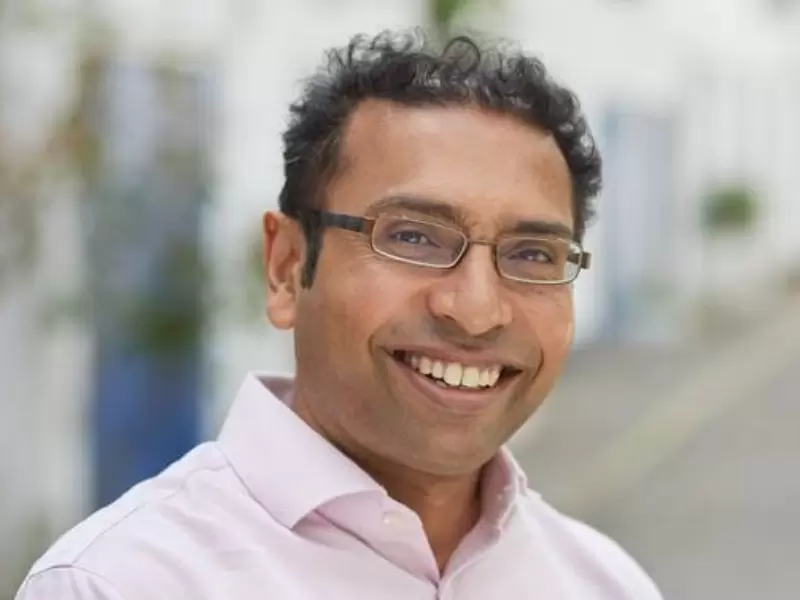 Saurabh Mukherjea / LinkedIn
Saurabh Mukherjea, founder and chief investment officer of Marcellus Investment Managers, advised Indian American investors to limit their exposure to India to 15% to 20% of their portfolios while discussing India's economic transformation, artificial intelligence and manufacturing prospects during a conversation event in Seattle on June 7.
Mukherjea spoke at Remitly headquarters during the inaugural Prose and Kauns Conversations event, moderated by Kushal Shah, senior product manager at Remitly and co-founder of Prose and Kauns. The event drew about 45 attendees from Seattle's Indian American technology, finance and entrepreneurship communities.
Addressing investment strategies for the diaspora, Mukherjea said U.S.-based investors should be cautious about overallocating assets to India despite the country's long-term growth prospects.
"For a typical affluent NRI, I haven't seen the logic of why any more than 15 to 20 percent should be in India, because you're living in a market which gives you far more," he said.
"The 10-year returns from the American market are 15 percent. The 10-year returns from India are 8 percent in dollar terms."
Mukherjea also highlighted GIFT City as a mechanism that could simplify investing in India for nonresident Indians.
"You can sit in the comfort of your residence in Seattle and open a PMS account in GIFT City," he said. "You can invest in dollars, you won't pay any taxes there, you simply file your tax returns here. It's a remarkable construct."
Describing the structure, he added: "GIFT City next to Ahmedabad is a dollar jurisdiction. Everything is in U.S. dollars. The banking system there is regulated by the Reserve Bank of India. You will not pay capital gains tax in India. From there, you can access everything in the world."
The discussion also focused on India's economic outlook and the effects of artificial intelligence on the country's technology sector. Mukherjea argued that India is entering a period of significant change, with manufacturing poised to play a larger role in economic growth.
"For the first time since independence, we will have a big manufacturing boom," he said.
"For the last 50 years, every prime minister I've known has wanted to revive manufacturing. Not a single Prime Minister succeeded. As the currency overvaluation goes away over the next 2, 3, 4 years, manufacturing exports will take off."
He pointed to several regions where he said the trend is already visible, including Coimbatore, Hosur, parts of Gujarat, Telangana, Andhra Pradesh, the National Capital Region and Ludhiana.
Mukherjea also discussed how artificial intelligence could reshape employment opportunities for younger Indians, particularly outside major metropolitan areas.
"What AI has done is reduce the size of the project that is commercially viable," he said.
"A decent coder systems architect can do a small project for $50,000, deliver it in 2-3 days to an SME client. So a lot of youngsters are saying, why do I want to deal with the traffic of Bombay or Bangalore? Let me stay in my hometown, do gig work across the world, earn money, build a small business if they want. That'll be the future."
The event opened with remarks from Soumith Raju, deputy consul general of India in Seattle, and Pankaj Sharma, chief business officer at Remitly.
The conversation concluded with a question-and-answer session covering foreign institutional investor flows, India's fertility rate and population trends, manufacturing competitiveness relative to China, and investment strategies for diaspora investors.
Mukherjea closed with an assessment of India's position in the global economy.
"India rewards you if you understand it and realize that this is actually a country with lots of bright, hungry people who will overcome setbacks," he said.
"If Microsoft India were listed, it would be by far the largest listed company in India. We are already part of the global mainstream."
Discover more at New India Abroad.
Related









ADVERTISEMENT

ADVERTISEMENT
E Paper
Video

Comments
Start the conversation
Become a member of New India Abroad to start commenting.
Sign Up Now
Already have an account? Login