ADVERTISEMENT
ADVERTISEMENT



How Hindus Saved their Sikh Brethren During the 1984 Violence
This article recognizes both the suffering of Sikh victims and the documented solidarity of Hindu rescuers, without diminishing either.
-
 Geeta Sikand
 - Tue, 09, Jun 2026
- 03:06 EDT
- 17
 Representative image / Pexels
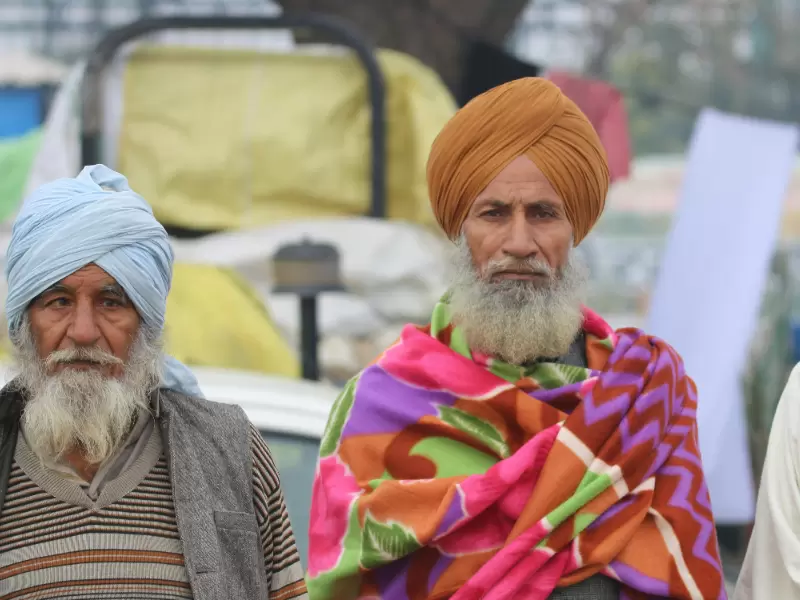
Evidence shows that thousands of Hindus risked their lives to protect Sikhs. Countless Hindu families sheltered their Sikh brethren in their homes, lovingly provided food and clothing to disguise, and stood up to the violent mobs to defend them. Thousands of Sikh survivors have testified that their Hindu neighbors intervened and saved their lives. This was not a conflict between Hindus and Sikhs.
This article recognizes both the suffering of Sikh victims and the documented solidarity of Hindu rescuers, without diminishing either.
As Mark Twain said long ago, the lie goes halfway around the world before the truth has finished tying its shoes, and in this case, as always, the lie served its purpose. What happened to the Sikhs in the 1984 three-day pogrom was one of the greatest stains on humanity. Killing innocent people, burning homes, and spreading fear can only be the identity of terrorists. Never the identity of any religion. Undoubtedly, Hindu-Sikh relations are rooted in centuries of shared history, mutual respect, and sacrifice.
The Tragedy
The pogrom was a devastating, politically orchestrated tragedy that claimed about 3,000 lives.
Acts of Rescue
At the same time, thousands of ordinary Hindus chose compassion over violence and became a vital lifeline for targeted Sikh families.
A Blatant Lie: “Hindu mobs went on a rampage, killing thousands of Sikhs” an inflammatory false anti-Hindu statement by the Los Angeles Times.”
On December 19th, 2025, the Los Angeles times published an article by Itzal Luna citing an inflammatory false statement wrongfully placing the blame of the pogrom on Hindus by Itzal Luna, “Hindu mobs went on a rampage, killing thousands of Sikhs” Not true. The author called out this journalistic malpractice to the Los Angeles times in an unpublished rebuttal, recklessly profiling the Hindu community as perpetrators. Thankfully, another media outlet published the authors’ rebuttal. Unsurprisingly, the journalistic malpractice by the Los Angeles times is not new and warrants an investigation. Is deep state dictating the agenda the Los Angeles times must follow. Is the deep state against Hindus? Who is controlling the agenda of the Los Angeles times.
When no response was received from the www.LAtimes, the author subsequently filed a formal complaint to the California Hate hotline - CA versus Hate against this episode while highlighting the history of overt and covert anti-Hindu hate initiatives by the Times targeting Hindus. All efforts were to no avail.
The Truth: A Rebuttal Re Seeking green card she was taken by ICE was submitted by the author to the Times to counter its blatant Hinduphobia.
In my rebuttal to the Los Angeles times, I stated, “You published a fabricated and inflammatory statement accusing Hindus of attacking the Sikhs during the anti-Sikh pogroms in Delhi after the assassination of India’s Prime Minister Indira Gandhi by her Sikh bodyguards. I cited evidence that the perpetrators were India’s National Congress Party’s leadership and its workers. The Indian National Congress Party colluded with the Delhi Police and the Delhi City Administration because it also ruled Delhi in 1984. Importantly, independent civil society inquiries revealed the complicity against Sikhs was attributed to the Indian National Congress Party leader Mr. Rajiv Gandhi and the Delhi police. The 2005 Nanavati Commission report acknowledged the ‘systematic’ nature of the attacks by the Indian National Congress Party. These findings contradict the common media portrayal of the 1984 events as “riots,” since riots denote actions that are spontaneous and sporadic. The Indian National Congress Party leaders used its official voters’ lists/rosters to target the homes of the Sikhs.
How Hindus saved the Sikhs during the 3-day Pogrom
Yes. During the 1984 anti-Sikh pogrom, thousands of Hindus risked their own lives to protect their Sikh neighbors. While mobs, often organized by political figures, committed horrific violence, extensive accounts highlight Hindus offering safe harbor to targeted Sikhs. [1, 2, 3, 4, 5]
How Hindus Helped:
Shelter and Disguise: Hindu families hid Sikhs in their homes, locked them in bathrooms, and helped them shave their beards and cut their hair so they could blend in and avoid the mobs. [1]
Neighborhood Protection: In areas like West Delhi, groups of middle-class Hindu families stood guard at apartment buildings to prevent youths from burning the structures down. [1]
Sacrifices: Individuals like Prabhu Dayal, a Hindu factory worker in Ashok Vihar, died defending Sikh women from a violent mob that had set their building on fire. [1]
Public and Political Intervention: Notable figures, including the late Hindu author Khushwant Singh and politician Atal Bihari Vajpayee, publicly credited the Rashtriya Swayamsevak Sangh (RSS) and independent Hindu citizens with stepping in to save helpless Sikhs and taxi drivers. [1]
Did the RSS help?
After the anti-Sikh riots of 1984, noted Sikh columnist and author Khushwant Singh had said, “RSS has played an honorable role in maintaining Hindu-Sikh unity before and after the murder of Indira Gandhi in Delhi and in other places. It was the Congress (I) leaders who instigated mobs in 1984 and got more than 3,000 people killed. I must give due credit to RSS and the BJP for showing courage and protecting helpless Sikhs during those difficult days. No less a person than Atal Bihari Vajpayee himself intervened at a couple of places to help poor taxi drivers.”
The connection between the RSS and the Sikhs has a historical context. During partition of India in 1947, RSS saved lives of an enormous number Sikhs also and played a leading role in protecting the population of Punjab from the onslaught of the Muslim league-led mobs. It also helped move them to safer places.
During that era the English Tribune wrote: “Punjab is the sword arm of Hindustan and RSS is the sword arm of Punjab (The Saffron Surge: Untold Story of RSS Leadership, Prabhat Prakashan).”
Why Historians Say It Was Not a "Hindu vs. Sikh" Conflict
Most historians and human-rights scholars distinguish between the broader Hindu community were the rescuers. Investigations, commissions of inquiry, and later court proceedings focused on the role of political leaders, local organizers, and failures of law enforcement rather than on an inherent conflict between Hinduism and Sikhism. It was an organized state sanctioned attack. Political leaders of India’s Congress Party were the perpetrators. The violence was an anti-Sikh pogrom, not rioting between Hindu and Sikh factions. Here is how…
Indian news reports today told of instances in which Hindus protected or hid Sikhs from homicidal mobs that began attacking Sikhs in the aftermath of Prime Minister Indira Gandhi's assassination.
In the Trilokpuri slum area of New Delhi, where rioters killed at least ninety-five people in a Sikh neighborhood, six hundred Sikh women and children escaped to Hindu homes and were sheltered by their Hindu neighbors, the reports said.
In Santnager, a small, mixed Hindu- Sikh area in the capital, Sikhs grieving over Mrs. Gandhi's death and Hindus deploring the anti-Sikh riots banded together in joint ''peace and protection committees'' that held off young Hindu marauders, the Communist Party newspaper The Patriot reported. Finally, the army arrived and the mob fled.
In an apartment building in West Delhi, two hundred middle-class Hindu families protected a handful of Sikh families from the mobs who threatened to burn the building unless the Sikhs were turned over to them, witnesses reported. The Hindus took the terrified Sikhs into their own apartments, along with their valuables, and hid them. They then formed defense squads and patrolled the building, the witnesses said.
From other cities across India, news accounts told of Hindu-Sikh ''solidarity'' marches, and of Hindus' pledging to rebuild gutted Sikh homes, shops and shrines.
The Long History of Hindu–Sikh Kinship
The statement's reference to "centuries of brotherhood, respect, and sacrifice" reflects a historical reality:
The Sikh Gurus were part of the broader Sanatan Hindu Dharma civilization of northern India.
Guru Tegh Bahadur gave his life to defend religious freedom of Sanatan Hindu Dharma.
Guru Gobind Singh set up the Khalsa and emphasized resistance to oppression against Sanatan Hindu Dharma.
For centuries, Punjabi families remain a blend of both Hindu and Sikh members within their extended family networks.
During India's struggle for independence, Hindus and Sikhs fought seamlessly against their mutual oppressors.
Prior to the formation of the Sikh panth (sect), there was no distinction among Hindus and Sikhs, in the aegis of the Sanatan Hindu Dharma.
Taken together, these facts underscore two essential points: the 1984 violence against Sikhs was a horrific act of political violence by India’s Congress Party. Thousands of Hindus showed remarkable courage in protecting their Sikh brethren. The events of 1984 are therefore better understood not as a Hindu-Sikh conflict, but as an anti-Sikh attack carried out with the complicity of political leaders of the ruling Indian National Congress Party and law enforcement, during which thousands of Sikhs were victimized and many Hindus acted bravely in their defense.
Historically, Hindus and Sikhs have shared deeply inseparable cultural, social, and family ties. Common practices—such as wearing the steel bracelet (Karha), worshipping together, sharing meals at homes, gurdwaras and mandirs, and intermarrying—reflect that closeness. The author’s own marriage was an arranged marriage, with a clean-shaven Sikh by their respective families.
Summary
The anti-Sikh violence of 1984 was a brutal attack on innocent Sikh civilians and stays one of the darkest chapters in modern Indian history. At the same time, thousands of Hindus risked their lives to shelter, feed, and protect Sikh neighbors from violent mobs.
Survivor testimonies, news coverage, and human rights investigations document numerous episodes of Hindu neighbors, friends, and colleagues protecting Sikhs during the anti-Sikh violence that followed the assassination of Prime Minister Indira Gandhi by her Sikh bodyguards on October 31,1984.
The 1984 anti-Sikh pogrom by India’s Congress Party was not a conflict among Hindu and Sikh communities. It is wrong to say that it was Hindu mobs who attacked the Sikhs. Quite the contrary, the evidence reveals an inseparable Hindu-Sikh solidarity. The despicable attacks on Sikhs were purely politically and brutally orchestrated by India’s National Congress Party as vengeance for the assassination of Prime Minister Indira Gandhi by her Sikh bodyguards.
Risking their own lives, Hindus willingly sheltered their Sikh brethren in their homes, basements, and shops; disguised the Sikhs so they would not be identified by the perpetrators.; escorted Sikh families to safer areas.; stood guard outside homes and neighborhoods; helped transport victims to hospitals; protected gurdwaras and businesses from attack; and arranged safe passages out of affected neighborhoods. For Hindus, the act of protecting their Sikh brethren was no different than if they were protecting their own family members. Pew Research reports that 95% of Sikhs identify as proud Indian citizens and feel free to practice their faith as do all the religious minorities in India. The Sikh community is among the most prosperous in India today.
The author is an Associate Professor at University of California Irvine.
(The views and opinions expressed in this article are those of the author and do not necessarily reflect the official policy or position of New India Abroad.)
Discover more at New India Abroad.
Related









ADVERTISEMENT

ADVERTISEMENT
E Paper
Video

Comments
Start the conversation
Become a member of New India Abroad to start commenting.
Sign Up Now
Already have an account? Login