ADVERTISEMENT

ADVERTISEMENT

Indian American anesthesiologist receives Texas teaching honor

Texas foundation recognizes Dr. Aditee Ambardekar for excellence in medical education and training future physicians across institutions

 Dr. Aditee Ambardekar Dr. Aditee Ambardekar / UT Southwestern Medical Center

Indian American pediatric anesthesiologist Dr. Aditee Ambardekar, a professor of anesthesiology and pain management at UT Southwestern Medical Center, has received the Piper Professor Award, recognizing outstanding college educators in Texas. The honor, presented by the Minnie Stevens Piper Foundation, recognizes excellence in college-level teaching. Ambardekar is the 20th current or former UT Southwestern faculty member to receive the award since it was established in 1958.

The foundation selects 10 recipients each year based on nominations submitted by colleges and universities across Texas. Each recipient receives a $5,000 award.

ALSO READ: South Texas College names Teena Jacob 2026 Faculty..

Born in India and raised near Annapolis, Maryland, Ambardekar said her work as a pediatric anesthesiologist and educator is driven by a desire to make a lasting impact.

“It’s meaningful, impactful work,” she said. “Taking care of kids feels like I am investing in the next generation.”

She said that commitment also extends to training future physicians.

“Teaching residents, knowing they will go on and have an impact on their patients, is important to me,” she said. “This is my way of having an impact.”

Stephen Kimatian, chair of UT Southwestern's Department of Anesthesiology & Pain Management, praised Ambardekar's contributions to medical education.

“I can think of no better recipient of the Piper Professor Award,” Kimatian said. “Whether it is here at home where she serves as Program Director for our core residency in anesthesiology, or nationally in her work with the Accreditation Council for Graduate Medical Education and American Board of Anesthesiology, Dr. Ambardekar is the consummate medical educator.”

Ambardekar earned a bachelor's degree in cell biology and molecular genetics from the University of Maryland, College Park. She received her medical degree from the University of Maryland School of Medicine in 2004 before completing a residency in anesthesiology at the Hospital of the University of Pennsylvania and a pediatric anesthesiology fellowship at Children's Hospital of Philadelphia.

She later joined the faculty at Children's Hospital of Philadelphia, where she directed the pediatric anesthesiology fellowship and developed a simulation-based education program. Encouraged by mentors, she also earned a master's degree in education from the University of Pennsylvania.

“As physicians, we are expected to teach everyone around us – residents, patients, families,” she said.

Ambardekar joined UT Southwestern in 2014 after moving to Dallas. Since then, she has worked with medical students, residents, fellows and simulation learners while helping revamp the anesthesiology curriculum for undergraduate medical education. She also supports graduate and continuing medical education and serves as the anesthesiology liaison for the Burn Center, with a clinical focus on pediatric burn anesthesia.

Alongside her teaching responsibilities, Ambardekar spends about 40% of her time in the operating room and conducts clinical research on anesthesia care for children with burn injuries.

Reflecting on her work, she said, “Pediatric anesthesiology is very challenging, but also rewarding. You’re taking care of patients at some of their most vulnerable times.”

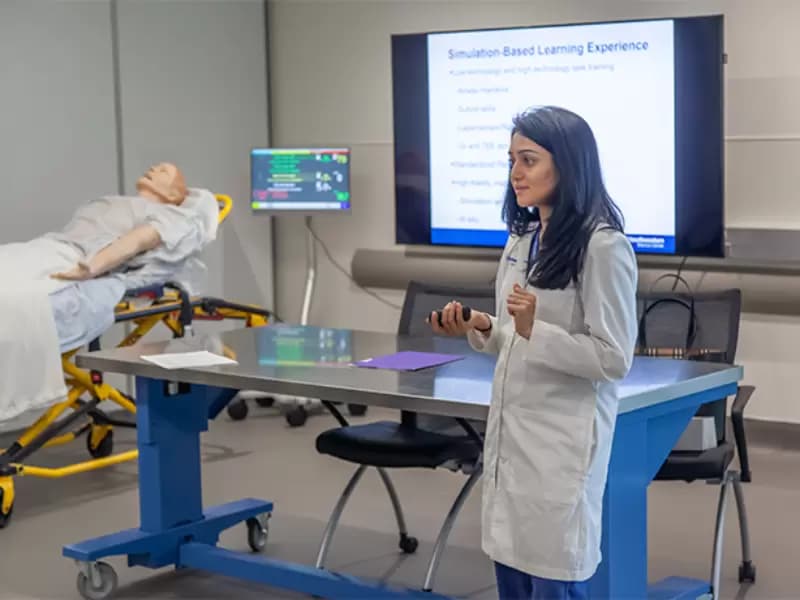
She added that simulation-based learning has shaped her approach to education.

“Simulation made teaching fun for me and I became a better doctor,” she said. “The simulation lab is a safe place to learn. It is OK to make mistakes there.”

Receiving the Piper Professor Award, she said, reinforces her commitment to medical education.

“When you find work that makes a difference, you want to work harder,” she said. “For me, this is my work; it is what I love to do.”

Discover more at New India Abroad.

Comments

Leave A Comment

Required fields are marked (*).

Related

Talk to us?