ADVERTISEMENT

ADVERTISEMENT

Why the guru still matters on Guru Purnima

A gruu is not merely someone who gives answers. A guru helps us see what we cannot yet see about ourselves.

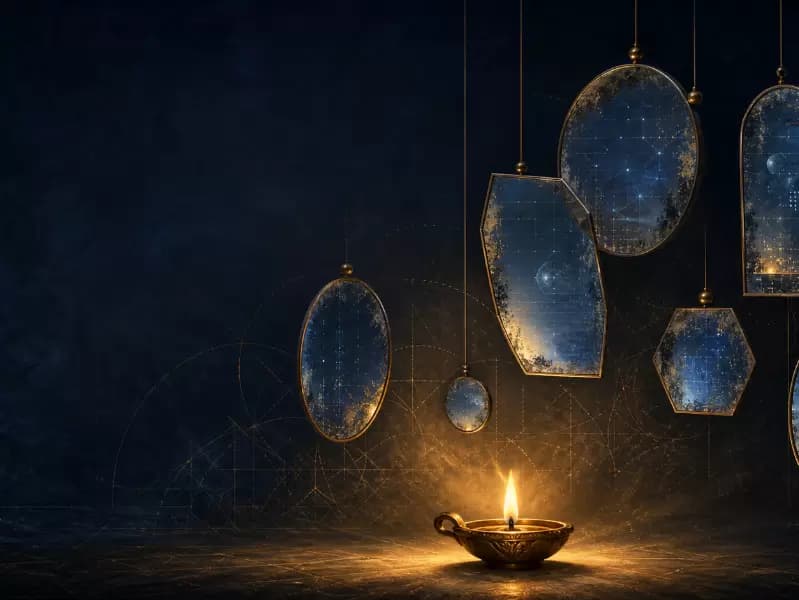
 Representative Image Representative Image / Generated using AI

Every year, Guru Purnima invites Indians around the world to pause and remember those who shaped their lives through teaching, example, correction, and grace. For those of us in the diaspora, it is also a good moment to reflect on a word that is both ancient and misunderstood: guru.

In the West, the word often carries mixed meanings. Sometimes it suggests wisdom and spiritual depth. At other times, it evokes charismatic authority, cultic dependence, and abuse. Recent scandals have only strengthened that suspicion. Yet to reduce the guru tradition to either reverence or fear is to miss its deeper meaning.

Also Read: Beyond the Modern ‘Guru’: Rediscovering the Classical Ideal 

In the Indian tradition, a guru is not simply a teacher. A teacher may explain a subject, train a skill, or pass on information. A guru does something more difficult and more important: a guru helps transform the seeker. The Muṇḍaka Upaniṣaddescribes such a teacher as one who is both grounded in scripture and established in realization. The Bhagavad Gītā adds that the student must approach such a teacher with humility, sincere questioning, and service. That balance matters. The tradition does not ask for blind obedience. It asks for readiness to learn.wisdomlib+1

This distinction feels especially important now. We live in an age of information abundance. Knowledge is available instantly through books, podcasts, universities, and artificial intelligence. But information alone does not produce wisdom. It does not automatically deepen character, remove arrogance, or help us live with integrity. For that, another kind of learning is required.

I learned this early, and painfully.

When I completed 12th grade in India at age fifteen, I realized that I had confused a good memory and quick understanding with the discipline required to study well. My final results were poor, and I felt I had compromised my future. When I spoke with my Sanskrit teacher, he did not simply console me. He told me that I first needed humility and a reality check before deeper learning could begin. He then gave me the Medha Dakshinamurthy mantra and asked me to practice it sincerely. Over time, that guidance changed my attitude, my effort, and eventually the direction of my life.

Years later, I encountered similar guidance in a different form. Dr. Ken Anbender helped me see that much of my Indic wisdom was still largely cognitive. I understood many ideas, but I had not yet lived them. That realization changed my life goals and gradually moved me from physics toward research and teaching focused on the inner development of leaders. Even today, he remains a mirror who encourages me toward joy, integrity, and humility.

These experiences taught me that a guru is not merely someone who gives answers. A guru helps us see what we cannot yet see about ourselves. Sometimes that comes through a mantra. Sometimes through a question. Sometimes through a presence that quietly exposes the gap between what we know and how we live.

That is why the guru remains relevant in the twenty-first century. The real crisis of our time is not lack of information, but lack of inner coherence. We know more, but are not necessarily wiser. We are more connected, but not always more grounded. We can access endless content, but still struggle to transform knowledge into discernment and achievement into meaning.

In that sense, Guru Purnima is not only about honoring formal spiritual teachers. It is also about recognizing all those who awakened us: parents, mentors, professors, friends, guides, and elders who helped us become more truthful, more humble, and more fully ourselves.

At its best, the guru tradition is not about dependency. It is about freedom from ignorance. A true guru does not ask us to stop thinking. A true guru helps us think more deeply, see more clearly, and live more honestly. The aim is not surrender of intelligence, but surrender of arrogance.

For Indians living across the world, this insight matters. Guru Purnima is not just a ritual from the past. It is a reminder that the deepest learning still happens in relationship, and that wisdom is transmitted not only through ideas, but through the lives of those who embody them.

On this Guru Purnima, the invitation is simple: to bow in gratitude to those who shaped us, and to ask whether we are living what they tried to teach us.

I bow to all my gurus, visible and invisible, who helped me move from knowledge toward wisdom, and from ambition toward humility.


(The views and opinions expressed in this article are those of the author and do not necessarily reflect the official policy or position of New India Abroad.)

Discover more at New India Abroad.

Comments

Leave A Comment

Required fields are marked (*).

Related

Talk to us?