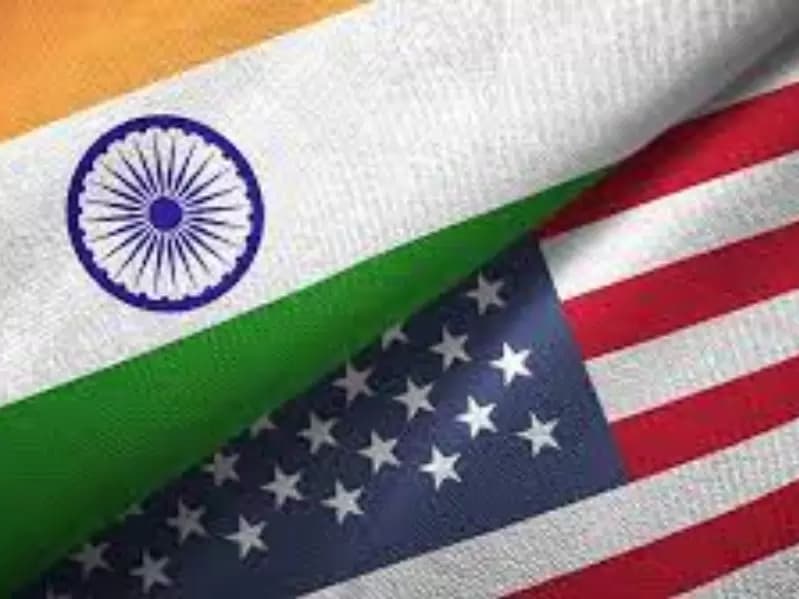
Representative image / File photo/IANS
The meeting between Prime Minister Narendra Modi and U.S. President Donald Trump on the sidelines of the G7 Summit in France in June served as a reminder of the enduring importance of the India-United States partnership. Despite differences between the two nations, both leaders reaffirmed their commitment to strengthening economic, strategic and people-to-people ties.
These discussions underscored a reality that has become increasingly evident over the past two decades: The relationship between the world's oldest democracy and the world's largest democracy remains one of the defining partnerships of the 21st century.
As the United States celebrated the 250th anniversary of its independence, and India celebrates its 80th anniversary on Aug. 15, Indian Americans have ample reason to reflect not only on America's remarkable democratic journey but also on the unique role that the Indian diaspora has played in strengthening the bonds between these two great nations.
The story of America at 250 is ultimately a story about freedom, opportunity, innovation and democratic resilience. The United States emerged from a struggle for self-governance in 1776 and developed into a nation that attracted generations of immigrants seeking a better future. India, after securing its own independence in 1947, embarked on a democratic experiment of unprecedented scale. Today, these two democracies share common values rooted in liberty, pluralism, constitutional governance and the rule of law.
For Indian Americans, the anniversary offers a moment to celebrate dual legacies. The community has become one of the most successful immigrant groups in the United States, contributing significantly to business, science, medicine, technology, education, public service and culture. From Silicon Valley boardrooms to research laboratories, from elected office to entrepreneurial ventures, Indian Americans have helped shape modern America while maintaining strong connections to their ancestral homeland.
The Indian diaspora has become one of the strongest bridges connecting Washington and New Delhi. Families, educational exchanges, business partnerships and cultural ties have created a network of relationships that transcend political cycles. This people-to-people connection has often provided stability and continuity even during periods when governments disagreed on policy issues. Few bilateral relationships in the world enjoy such a powerful human foundation.
One of the most significant areas of collaboration between India and the United States is entrepreneurship and innovation. Indian-origin entrepreneurs have become central figures in America's startup ecosystem, founding and leading companies that generate jobs, develop transformative technologies and drive economic growth.
At the same time, increasing numbers of Indian startups are attracting American investment and expanding into global markets. The startup corridors connecting Bengaluru, Hyderabad, Mumbai, San Francisco, Boston, Austin and New York have created a vibrant innovation partnership. As artificial intelligence, biotechnology, clean energy and advanced manufacturing reshape the global economy, collaboration between Indian and American entrepreneurs will be increasingly important to maintaining democratic leadership in technological innovation.
Another important dimension of India's rise is the vision of Aatmanirbhar Bharat. The initiative is aimed at strengthening India's domestic capabilities while remaining deeply integrated with the global economy. The goal is to build resilient supply chains, expand manufacturing capacity, encourage innovation and reduce strategic vulnerabilities. For the Indian diaspora, Aatmanirbhar Bharat presents opportunities to invest, mentor, transfer knowledge and help connect Indian enterprises with global markets. Indian Americans are uniquely positioned to contribute to this effort because they understand both India's aspirations and America's strengths in technology, capital formation and entrepreneurship.
The next chapter of India-U.S. relations will be defined by cooperation in critical technologies, education, defense, health care, clean energy and economic development. The challenges facing the world — from climate change and cybersecurity to supply chain resilience and geopolitical uncertainty — require democratic nations to work together. India and the United States are well positioned to lead such efforts.
As America and India celebrate their independence anniversaries this year, the occasion is an opportunity to look toward the future. While the journey from 1776 to 2026 reflects the enduring power of democratic values, this is built going forward on sound trade deal fundamentals and respect for immigration sensibilities. The U.S. must also reconsider its closeness to Pakistan, which has become a stumbling block between the two countries. Together, these two democracies can partner on projects and minilaterals of significance, such as the Quad and IMEC, that can contribute to the global commons in helping shape a future built on freedom, opportunity, innovation and shared prosperity.
Indian Americans today can proudly celebrate not only the nation they call home but also the unique role they play in advancing one of the most important democratic partnerships in the world.
(The views and opinions expressed in this article are those of the author and do not necessarily reflect the official policy or position of New India Abroad.)
Discover more at New India Abroad.
ADVERTISEMENT
ADVERTISEMENT
Comments
Start the conversation
Become a member of New India Abroad to start commenting.
Sign Up Now
Already have an account? Login