ADVERTISEMENT

ADVERTISEMENT

Krishnamoorthi warns of ‘normalization’ of anti-Indian hate

Krishnamoorthi also criticized the Trump administration’s H-1B visa fee and warned it could weaken US competitiveness.

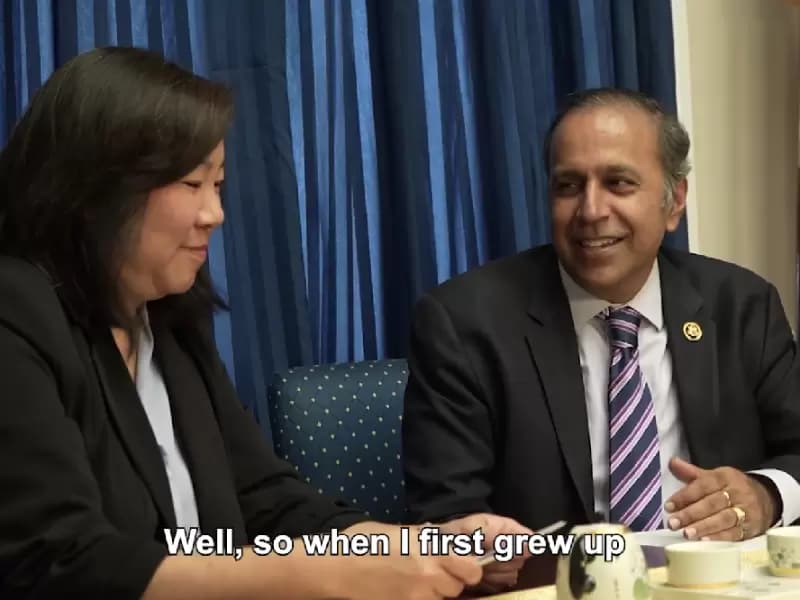
 Raja Krishnamoorthi  Raja Krishnamoorthi / YouTube/ CAPAC

Congressman Raja Krishnamoorthi warned that anti-Indian and anti-Asian hate has become increasingly normalized in the United States and urged lawmakers to push back against rhetoric targeting immigrant communities.

Speaking in the latest episode of the Congressional Asian Pacific American Caucus’ “Spill the Tea” series, Krishnamoorthi said the trend had “metastasized over 10 years into almost like a normalization of hate, whether it’s toward Chinese-Americans during COVID and since then, or whether it’s toward Indian-Americans.”

Also Read: Ro Khanna urges Democrats to stop political name-calling


In the interview, Krishnamoorthi, who represents Illinois’ 8th Congressional District and serves as co-chair of CAPAC’s Immigration Task Force, discussed the rise in anti-Asian and anti-Indian hate, attacks on legal immigration and the Trump administration’s $100,000 fee for new H-1B visas.

“Donald Trump, as soon as he came into office, he really played on people's kind of latent fears of the other, whoever they were,” Krishnamoorthi said, attributing the rise in hostility to rhetoric that played on fears of people perceived as outsiders.

He said Trump had pointed to minority and immigrant communities as being responsible for Americans’ economic difficulties, adding that such rhetoric had contributed to a broader trend.

H-1B tax

The congressman also criticized policies affecting legal immigration, including the administration’s $100,000 fee for new H-1B visas. He said the policy could make it harder for the United States to attract highly skilled workers at a time when countries are competing for global talent.

“Our competitiveness depends on attracting the very best talent on earth,” he said. “Whether it’s people from India or China or Sweden, it doesn’t matter.”

He described the $100,000 H-1B fee as a “tax” on workers who fill highly technical roles in the US economy and said it could discourage skilled professionals from coming to or remaining in the country.

“When you put this, what I call a tax, $100,000 tax on this group of people who, by the way, fill some of the most kind of exquisite technical roles in our economy,” Krishnamoorthi said, “you're basically pushing these people away in the first instance and then probably getting people here to rethink whether they should stay.”

He warned that companies could respond by moving work overseas if they are unable to bring skilled workers into the United States.

“You can either onshore the talent or offshore the work,” Krishnamoorthi said.

Krishnamoorthi called for changes to the legal immigration system and urged policymakers to avoid what he described as “own goals” involving H-1B visas and other legal immigration pathways.

“We’ve got to fix our legal immigration system and we’ve got to stop, you know, these own goals, so to speak, on H-1B and, you know, other legal pathways that people have used to enrich our economy,” he said.

AANHPI Trailblazers

As the United States marks its 250th anniversary, Krishnamoorthi also offered an optimistic message to Asian American, Native Hawaiian and Pacific Islander communities.

“Some people might think that we don't belong, but we not only belong, but we are going to be the trailblazers for an even better country to come,” he said.

He said Americans would need to work together despite their differences.

“We’ve got to all kind of row together,” Krishnamoorthi said, adding that differences between communities can ultimately make the country stronger.

Discover more at New India Abroad.

Comments

Leave A Comment

Required fields are marked (*).

Related

Talk to us?