ADVERTISEMENT
ADVERTISEMENT



The Next 25 Years of the U.S.-India Partnership
India’s rise rests on an unusual combination of scale, ambition and state capacity
-
 Khanderao Kand
 - Sat, 15, Aug 2026
- 02:08 EDT
- 26
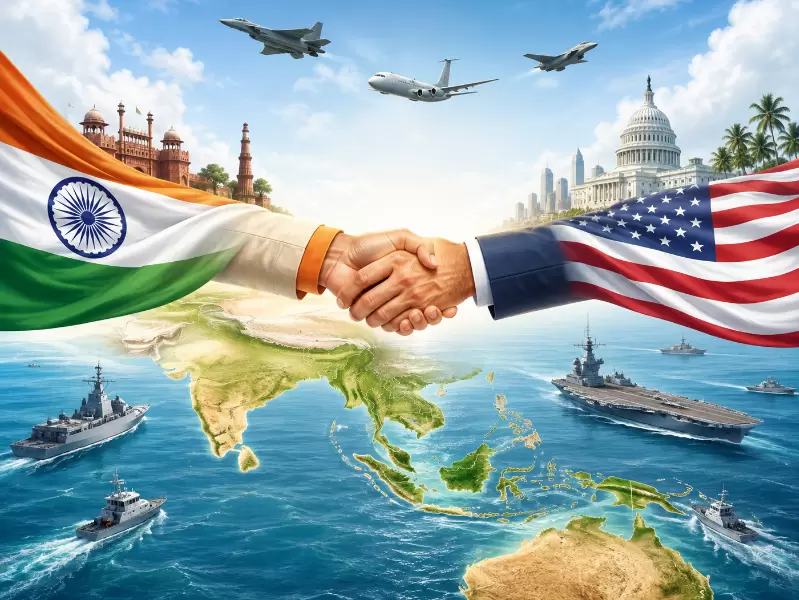
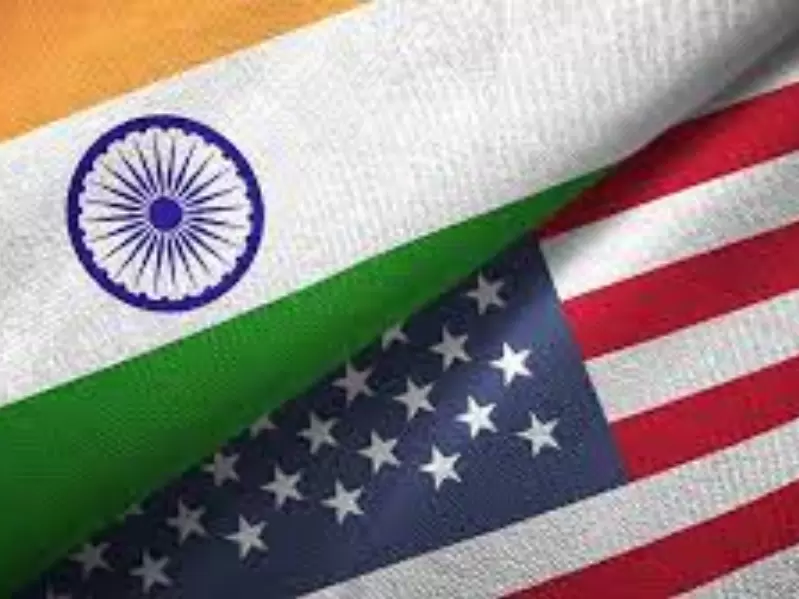 Representative image / File photo/IANS
The next quarter century could be the most consequential era in U.S.-India relations. As India advances toward Viksit Bharat and the United States pursues a more self-confident, interest-driven global posture, the two democracies are no longer discussing whether they matter to each other. The real question is whether they can build the strategic maturity to matter together.
India’s rise rests on an unusual combination of scale, ambition and state capacity. It is poised to remain the world’s most populous nation, to deepen one of the world’s largest consumer markets and to expand into a major military power with growing reach across land, sea, air, space and cyber. Put together, these three assets make India not just a regional player but a system-shaping power. The United States should recognize that India’s rise is not a temporary trend; it is a structural reality.
That reality creates both opportunity and responsibility. For Washington, India is the most credible large democratic partner in the Indo-Pacific and beyond. For New Delhi, the United States is the indispensable source of advanced technology, capital and strategic convergence at a time when China risk is rising and supply chains are being reorganized. The partnership therefore cannot be built on sentiment alone. It must rest on hard interests, trust and discipline.
The strongest evidence of this shift is the move from iCET to TRUST. The original iCET framework created a foundation for cooperation in semiconductors, AI, quantum and advanced communications. TRUST broadens that agenda into critical minerals, biotechnology, energy, space and AI infrastructure. That matters because strategic partnerships are ultimately judged not by declarations, but by whether they produce ecosystems: supply chains, standards, investment, co-production and durable institutional habits.
Defense is another pillar where the relationship has matured quickly. The 2025 joint leaders’ statement and subsequent policy architecture show that both sides now see defense not simply as arms sales, but as a platform for interoperability and industrial cooperation. The next stage should focus on co-development, secure technology sharing, maritime coordination and joint readiness in the Indo-Pacific. India’s military modernization, if paired with U.S. technology and industrial support, can create a stronger balance against coercion in Asia.
Yet the partnership will not be frictionless. No serious relationship between major powers is. India will continue to guard strategic autonomy, and the United States will continue to expect alignment on core security concerns. There will be differences on trade, digital rules, export controls, human rights narratives, and relations with Russia and Iran. The answer is not to deny these fault lines, but to create a framework for managing them with maturity. Sometimes the two sides will need to agree to disagree without allowing one dispute to contaminate the whole relationship.
That maturity is especially necessary on Russia. The United States wants to reduce global dependency on Russian defense systems and constrain Russia’s broader strategic leverage. India, however, cannot change decades of procurement dependence overnight. Washington should therefore support India’s gradual defense diversification rather than demand instant rupture. At the same time, India can serve as a bridge: a large, credible power that can help reduce Moscow’s isolation without becoming subordinate to it. That role is more valuable if it is handled pragmatically, not rhetorically.
The strategic geography of the next 25 years also favors deeper alignment. India can be a conduit to the Global South and the Global East. In Africa, Southeast Asia, the Indian Ocean and parts of West Asia, India often has more credibility than the West because it is seen as a fellow developing country with civilizational depth and democratic legitimacy. That makes India a useful partner for the United States in development finance, digital public infrastructure, climate cooperation and capacity-building.
Connectivity will matter as much as ideology. Projects like IMEC point to a more diversified economic map linking India, the Middle East and Europe through commercial infrastructure and strategic connectivity. Central Asia also remains important, both for energy and for geopolitical balance. If Washington and New Delhi can align on corridors, logistics and critical minerals, they can reduce dependence on routes and partners that are vulnerable to Chinese coercion.
Climate cooperation is another area where the two countries can do more than talk. India needs growth, jobs and reliable energy; the United States needs large-scale partners who can help decarbonize without slowing development. Joint work on green hydrogen, grid resilience, energy storage and climate-smart infrastructure can turn a potential contradiction into a shared agenda. Space cooperation, too, is ripe for expansion, because both countries benefit from resilient satellite networks, launch capabilities and deep-space scientific collaboration.
India also has clear expectations from the United States. It wants an unambiguous stance against cross-border, state-sponsored terrorism. It wants technology access, not just technology rhetoric. It wants more predictable market access, more support for manufacturing and less policy volatility. Most of all, it wants to be treated as a co-author of the global order, not merely as a partner invited into someone else’s design.
The United States, for its part, wants India to keep deepening reforms, strengthen strategic reliability, reduce India’s dependency on Russia and accelerate the U.S. shift away from its China-sensitive dependencies. India can become a trusted destination for friendshoring, a credible defense partner and a rule-shaping power in technology and trade. Those goals are realistic if both sides remain patient and honest about the limits of convergence.
The next 25 years will not produce a perfect alignment. But they can produce something more durable: a partnership between two large democracies that understand power, respect sovereignty and accept that mature cooperation requires occasional disagreement. If India and the United States can combine trust with realism, and ambition with restraint, they can help define the architecture of the 21st century.
Discover more at New India Abroad.
Leave A Comment
Related



ADVERTISEMENT

ADVERTISEMENT
E Paper
Video

Comments
Start the conversation
Become a member of New India Abroad to start commenting.
Sign Up Now
Already have an account? Login